PARENTS
Is Revenge Bedtime Procrastination Keeping You up at Night?
Learn why so many parents are putting off ZZZs—and how to reprioritize rest!

Escrito por
Happiest Baby Staff
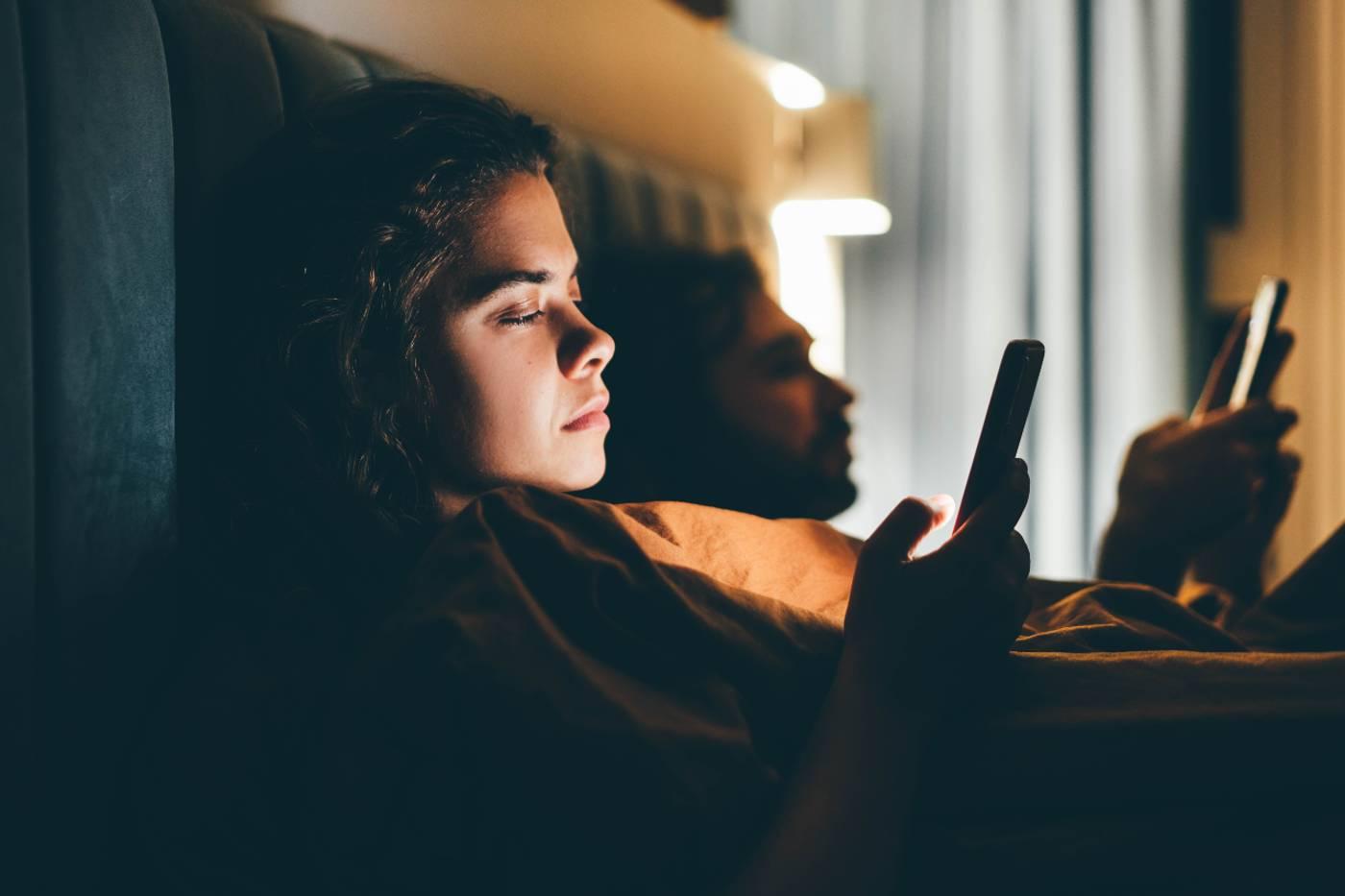
Your workday is done, dinner has been eaten, the dishes have been washed, the dog has been walked, your baby is soundly sleeping in SNOO, and you let out your first yawn of the evening. It is 10pm. What do you do? If you are like many, there is a good bet you did not answer “Go to bed.” Instead, you may be engaging in what has been called “revenge bedtime procrastination,” a phenomenon that, according to reports, is super common amongst parents. But what exactly is revenge bedtime procrastination—and why are so many parents putting off bedtime? To find out, here is everything you need to know about why you procrastinate at bedtime and how to stop.
What is revenge bedtime procrastination?
Bedtime procrastination is when you put off sleep to do something non-essential, like binge watching a show, all while knowing doing so goes against your best interest. The “revenge” part of “revenge bedtime procrastination” stems from the idea that staying up too late is the only way you can take some control of your time. Revenge bedtime procrastination covers both delaying getting into bed and putting off trying to fall asleep once you are under the covers. Research shows that this habit is not connected to not wanting to sleep, but rather to not wanting to quit other activities. The three defining factors of revenge bedtime procrastination include:
- Delaying sleep so that it reduces overall sleep time
- Having no “valid” reason for staying up later than you intended. (A “valid” reason is something like being ill, having insomnia, or attending a planned event.)
- Fully understanding that postponing bedtime will lead to negative consequences.
Why are parents prone to revenge bedtime procrastination?
For parents, the fleeting hours between your child’s bedtime and your own bedtime is often the only break you get from caregiving…and that time is precious! You finally have a moment for yourself to unwind and reconnect to you! While tired parents may intellectually understand that they should be getting the sleep they need after Baby is tucked in, they also understand that after-hours “me time” is super important to their mental health.
Revenge Bedtime Procrastination Examples
Are all past-bedtime activities revenge bedtime procrastination? Not exactly. If you put off lights-out to attend a special event, a stuffy nose is keeping you awake, or you lost track of time while working, you are not procrastinating. Revenge bedtime procrastination is needlessly and voluntarily staying up past your bedtime to engage in a leisure activity that serves no purpose but to entertain or distract.
Revenge bedtime procrastination examples include:
- Binge watching shows
- Devouring a book
- Doomscrolling
- Pleasure-scrolling
- Falling into a TikTok rabbit hole
- Losing yourself in a mobile game
How common is revenge bedtime procrastination?
You would be hard-pressed to find someone who does not engage in revenge bedtime procrastination from time to time. While there are not a ton of studies on the matter, one a survey out of the Netherlands found that 74% of adults turn in for the night later than they planned at least once a week, with no real reason for doing so.
Why do I procrastinate at bedtime?
Some experts speculate that we engage in revenge bedtime procrastination because we simply lack self-control. After all, research has shown that our capacity for self-control is at its lowest at the end of the day. Still others contend that revenge sleep procrastination is actually a natural result of being a night owl, or more technically, having an evening chronotype, according to a study in Frontiers in Psychology. Either way, revenge sleep procrastination does appear to be tied to significant daytime stress and desperately wanting “me time.”
If you are wondering What is revenge bedtime procrastination a symptom of?, consider one (or more) of these common reasons:
- You are unconsciously trying to exert some control over your life.
- You are trying to squeeze in stress relief after a draining day.
- You work from home and are struggling to maintain a sense of balance.
- You have always been one to procrastinate.
- You are struggling to manage your time
- You have very little time for yourself.
- You are a caregiver who is hoping to feel a bit like yourself again.
Is revenge bedtime procrastination related to ADHD?
It can be. Because difficulty with self-regulation is a central aspect of ADHD, many adults with ADHD drift into patterns of sleep procrastination, according to Psychology Today. Self-regulation struggles, of course, can snowball into other challenges, like impulsivity and hyperfocus, that can further spur revenge bedtime procrastination. Plus, the ADHD brain craves stimulation and distractions from an overactive mind. Think of revenge sleep procrastination and ADHD like this: When you delay bedtime, you also delay lying in bed trying to shut off your buzzing mind.
What are the side effects of revenge bedtime procrastination?
It is no surprise that staying up too late, coupled with early mornings, can very easily lead to sleep deprivation. Without proper sleep, the brain loses plasticity, negatively impacting thinking and mood. More specifically, chronic sleep deprivation due to revenge bedtime procrastination may…
- Spur and increase feelings of anxiety
- Increase daytime stress
- Stoke symptoms of depression
- Exacerbate symptoms of postpartum depression
- Impede emotional regulation
- Increases feelings of anger
- Lead to the development of high blood pressure, diabetes, heart disease, dementia and chronic pain
How do I stop revenge bedtime procrastination?
A 2022 survey found that 44% of folks did not think they could dramatically adjust their sleep routine even if they truly wanted to. But changing your sleep habits is not as hard as you may think. First off, to successfully adopt a new sleep schedule, you must do it gradually. For example, the Sleep Foundation suggests making 15- or 30-minute adjustments to your go-to-sleep time over a series of several days. Here are some point-by-point goals to help you stop revenge bedtime procrastination.
- Get morning light. Seeing bright light in the morning helps you fall asleep easier at night by properly calibrating your melatonin release.
- Sneak “me” time into the daytime. So many people procrastinate at bedtime because they have no downtime during the day. That means it is important to carving out some time for yourself earlier to help curb your need for revenge bedtime procrastination. (Perhaps start your day with meditation, take a midday walk, or even get your TikTok fix while you are waiting for dinner to cook.)
- Ditch arbitrary sleep goals. Instead of saying to yourself, “I need to be in bed by 10pm,” think about when your body feels ready for sleep and go from there. (Also, count backward from your preferred wake-up time to figure out how to get the ideal amount of sleep, which is around 7 hours.)
- Set a go-to-sleep alarm. Setting an alarm to sound an hour or so before you want to be asleep can help remind you to start winding down. You can also program downtime on your phone and telly.
- Consider an old-fashioned alarm clock. Use an old-school alarm clock (or a newfangled connected device like an Alexa) to discourage you from bringing your cell phone into your bedroom.
- Put screens to sleep before bedtime. If you love to scroll through your phone or zone out to Netflix in the evening to relax, that is fine. Just finish up about an hour or two before going to bed. (That means no in-bed screen time!) If you are struggling, utilize screen time limits that are built into your phone. Electronics stimulate your brain, delay/hinder REM sleep, and hamper the release of the sleepytime hormone, melatonin.
- Dim the lights. Just as you are powering down your phone, dim the lights in your home by 50 to 75% about 45 minutes to an hour before bedtime. This will help start the release of melatonin.
- Turn on white noise. If you have ever gotten drowsy when riding shotgun, you know the power of the steady hum of white noise. White noise activates your sleepytime muscle memory from long-ago womb- and baby-rocking. Plus, proper white noise, like SNOObie, creates a blanket of sound that muffles jarring sounds that could distract you from nodding off.
Final Thoughts on Revenge Bedtime Procrastination
As a parent, you know that a calming bedtime routine is instrumental to helping babies and children fall asleep with ease—and getting the rest they need. Isn’t it time you granted yourself the same care? To help, write down what your ideal winddown routine would look like, making sure it is realistic, then gradually implement it.
You May Also Be Interested In...
***
REFERENCES
- NPR: Stop doomscrolling and get ready for bed. Here's how to reclaim a good night's sleep
- Sleep Foundation: What Is “Revenge Bedtime Procrastination”?
- Bedtime procrastination: introducing a new area of procrastination. Frontiers in Psychology. June 2014
- Bedtime vs. While-in-Bed Procrastination. International Journal of Environmental Research and Public Health. August 2020
- Bedtime procrastination: A self-regulation perspective on sleep insufficiency in the general population. Journal of Health Psychology. July 2014
- Too Depleted to Turn In: The Relevance of End-of-the-Day Resource Depletion for Reducing Bedtime Procrastination. Frontiers in Psychology. March 2018
- Why Don’t You Go to Bed on Time? A Daily Diary Study on the Relationships between Chronotype, Self-Control Resources and the Phenomenon of Bedtime Procrastination. Frontiers in Psychology. February 2018
- Cleveland Clinic: Is Sleep Procrastination Keeping You up at Night?
- UW Medicine: What Is Revenge Bedtime Procrastination?
- Psychology Today: Adult ADHD and Coping With Sleep Difficulties
- ADDitude: How to Break the Exhausting Habit of Revenge Bedtime Procrastination
- Sleep Foundation: How Lack of Sleep Impacts Cognitive Performance and Focus
- Insomnia, anxiety, and depression during the COVID-19 pandemic: an international collaborative study. Sleep Medicine. November 2021
- National Sleep Foundation’s 2023 Sleep in America Poll: The Nation’s Sleep Health is Strongly Associated With the Nation’s Mental Health
- A scoping review of non-pharmacological perinatal interventions impacting maternal sleep and maternal mental health. BMC Pregnancy and Childbirth. August 2022
- Maternal stress, sleep, and parenting. Journal of Family Psychology. April 2019
- American Psychological Association: Stress and Sleep
- YouGov US: Do you think that if you wanted to you, you could adjust to a sleeping routine that is very different from your current routine?
- Sleep Foundation: How to Fix Your Sleep Schedule
- Centers for Disease Control and Prevention: Effects of Light on Circadian Rhythms
- Cleveland Clinic: Why You Should Ditch Your Phone Before Bed
Descargo de responsabilidad: La información en nuestro sitio NO es un consejo médico para ninguna persona o condición específica. Solo se proporciona como información general. Si tiene alguna pregunta o preocupación médica sobre su hijo o sobre usted mismo, por favor contacte a su proveedor de salud. La leche materna es la mejor fuente de nutrición para los bebés. Es importante que, en preparación para la lactancia y durante la misma, las madres lleven una dieta saludable y equilibrada. La combinación de lactancia materna y alimentación con biberón en las primeras semanas de vida puede reducir la producción de leche materna y es difícil revertir la decisión de no amamantar. Si decide utilizar fórmula infantil, debe seguir las instrucciones cuidadosamente.
Principales noticias





COMPARTIR ESTE ARTÍCULO
ELECCIONES DE LOS PADRES
Más vendidos