PARENTS
How to Raise Anti-Racist Kids—Resources for Parents
Explaining big topics to little kids isn’t easy. These anti-racism resources for parents can help you spark an age-appropriate conversation.

Escrito por
Happiest Baby Staff
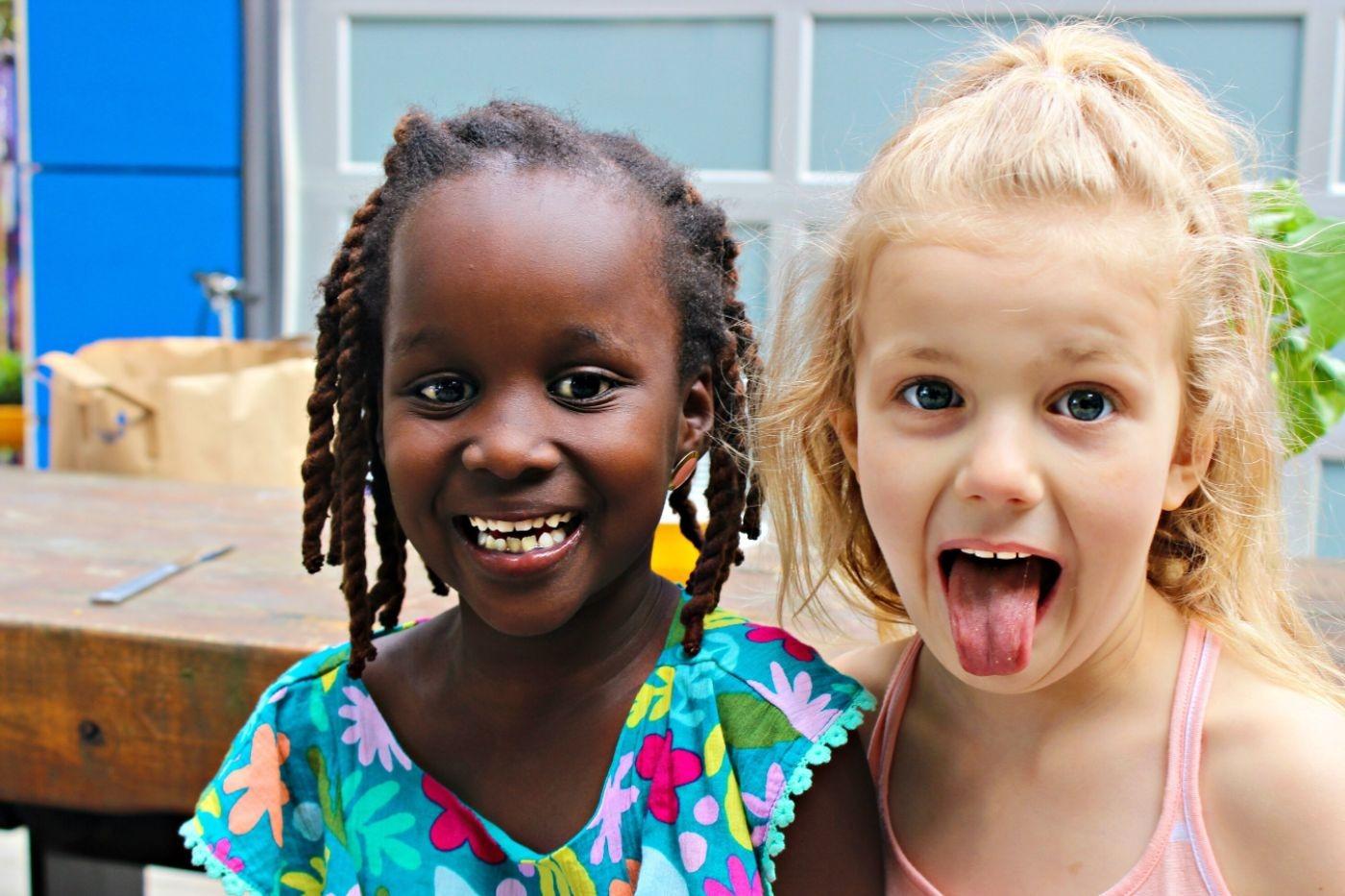
Explaining big topics to little kids is not easy, but having honest, ongoing discussions about tough issues is a crucial part of raising compassionate kids…especially when it comes to talking about race. Research shows that kids as young as 2 begin to use race to draw conclusions about people’s behaviours and before they are 3 they use race to choose playmates (and even earlier than that, they are more likely to look at faces that match the race of their caregivers!)—in other words, it is not too early to start the conversation now. But, if you are at a loss of words, here are resources you can lean on to spark a conversation, teach your children…and educate yourself.
The Conscious Kid has a variety of resources and reading lists about raising anti-racist kids. While some are free, other ongoing resources are available to Patreon supporters (please consider paying for these valuable tools!)
Books for Littles’ Anti-Racism for Kids 101 walks parents through starting a conversation, with lots of book suggestions to support your discussion.
Monique Melton offers several courses exploring anti-racism. Of particular interest for parents: Her Shine Talk for Kids—a six week program about how to talk to children clearly and consistently about race.
Dr. Mimi Nartey wrote a helpful guide for talking to kids: Race, Class, and Parenting: 7 Strategies for Raising Sensitive, Confident and Loving Kids. In addition, Dr. Nartey offers a special membership that gives parents access to exclusive events, a private Facebook Group, and a forthcoming online magazine on the topic.
Embrace Race has articles, guides, and webinars in their vast resource collection, including:
- 10 tips for teaching and talking to kids about race
- A webinar about supporting kids of colour in the wake of racial violence
- A webinar about addressing racial injustice with young kids
- A webinar about how kids learn about race
Raising Race Conscious Children frequently holds interactive workshops/webinars for parents. They also do individual one-hour consultations.
NPR’s Talking Race With Young Children is a good 20-minute primer about the topic.
The Longest Shortest Time's episode, "How to Not (Accidentally) Raise a Racist", taps an expert to answer parents' questions about race.
The American Academy of Paediatrics offers a guide for talking to children about racial bias.
Common Sense Media provides a variety of resources for parents on race, including:
- How to find books with diverse characters
- How to use media to raise anti-racist kids
- How to identify and point out racial stereotypes in movies
- A list of Coretta Scott King Book Award Winners
- A list of Latinx Books
Doing Good Together has compiled a collection of tips, videos, and tools to raise an anti-racist generation.
Sesame Street is running a special townhall episode airing on CNN at 10am EST on Saturday June 6th, but they have a few episodes in their archives that work especially well as conversation starters about racism and diversity:
- Episode 3140, which first aired in 1993 and very directly addresses racism.
- Season 48, Episode 12, Hair Training, in which Prairie Dawn and Gabrielle learn they can dance together even if their hair does not move the same (or you could just watch this very cute song celebrating Black hair).
- Season 45, Episode 3, Proud to Be Me, where Lupita Nyong’o stops by Sesame Street to teach children about the beauty of different skin colours.
- Season 44, Episode 15: Rosita’s Abuela, in which Rosita feels uncomfortable speaking Spanish in front of her friends…until Maria helps her feel confident about who she is.
Build a diverse bookshelf. Books are a wonderful conversation starter, and exposing your child to diverse faces and stories at a young age helps them grow into race-conscious little humans. Some places to start…
- 21+ Books That Teach About Race, Justice, and Equality (Happiest Baby)
- Here Wee Read has lots of diverse reading lists organised by theme
- Brightly offers some tips for building a diverse bookshelf
- The Brown Bookshelf’s signature 28 Days Later project highlights a book a day beyond Black History Month
Buy diverse toys and dolls. These Black-owned brands are a good place to start looking, and make sure your colouring-book-happy kid has a set of multicultural crayons.
For more ideas about how White parents can educate themselves and their children about racism, these two widely circulated pieces are chock-full of resources:
Descargo de responsabilidad: La información en nuestro sitio NO es un consejo médico para ninguna persona o condición específica. Solo se proporciona como información general. Si tiene alguna pregunta o preocupación médica sobre su hijo o sobre usted mismo, por favor contacte a su proveedor de salud. La leche materna es la mejor fuente de nutrición para los bebés. Es importante que, en preparación para la lactancia y durante la misma, las madres lleven una dieta saludable y equilibrada. La combinación de lactancia materna y alimentación con biberón en las primeras semanas de vida puede reducir la producción de leche materna y es difícil revertir la decisión de no amamantar. Si decide utilizar fórmula infantil, debe seguir las instrucciones cuidadosamente.
Principales noticias






COMPARTIR ESTE ARTÍCULO
ELECCIONES DE LOS PADRES
Más vendidos