BABY
How to Include Baby at Family Meals—Easily!
Family meals are so important! But it can be tricky figuring out how to include your baby in the mix. For help, here are eight dietitian- and mum-approved tips!

Escrito por
Gabrielle McPherson, MS, RDN, LDN
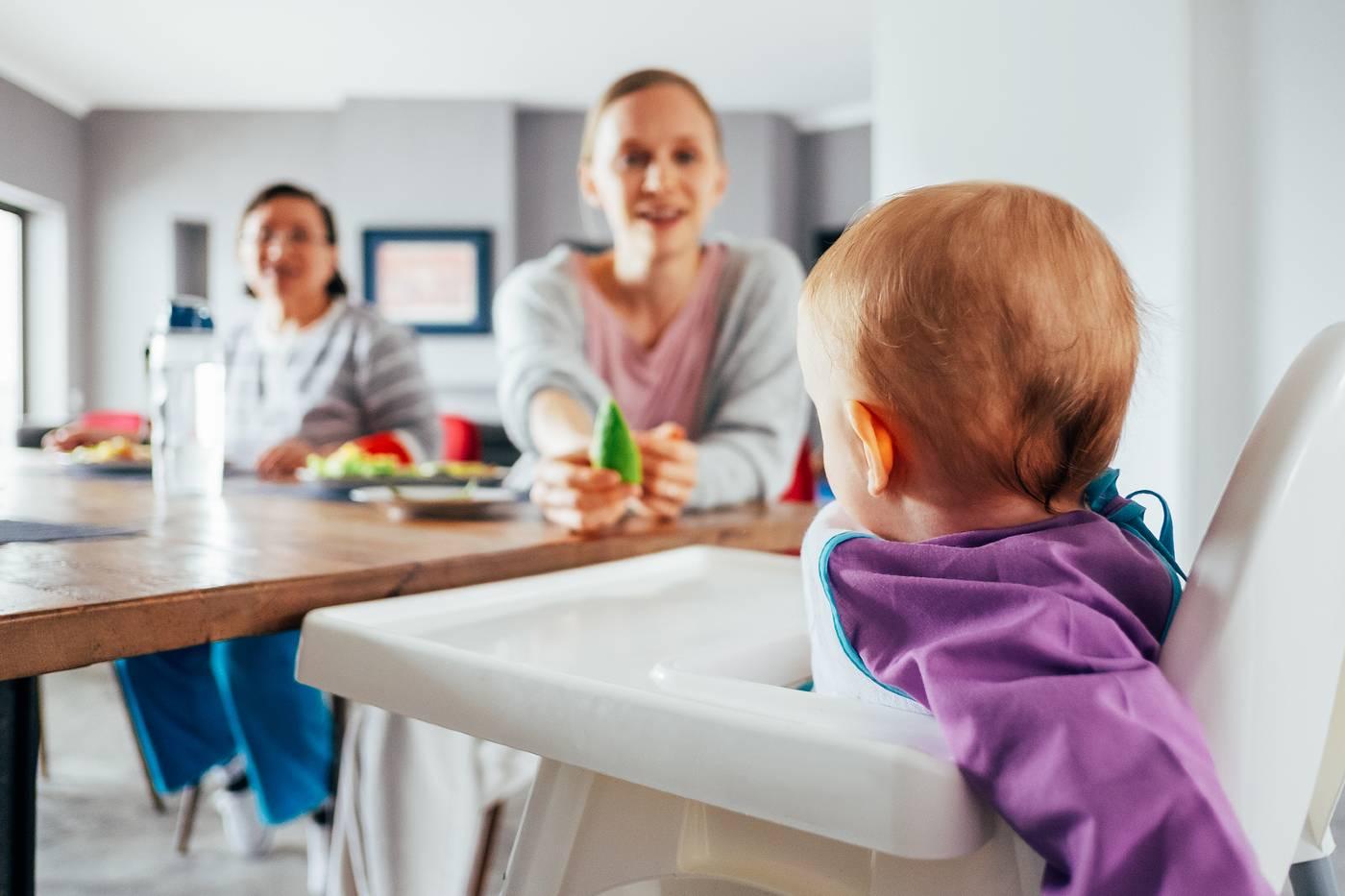
Family mealtime is pretty powerful. Research shows that eating together helps everyone enjoy food more, it builds family relationships, and it can even combat picky eating. Plus, children who have regular family meals are more likely to eat healthy and stay away from trouble and harmful activities down the road! That means involving babies in family mealtimes early is essential to their health and well-being. Stumped on how exactly you can pull off family dinners with a wiggly, messy, little one? Read on to learn eight easy ways to include your baby at the table.
Family meals extend beyond dinner.
News flash: Family meals do not alway have to be dinner! Any time spent eating at a table together counts. So if a nightly supper is out of reach for your family, shoot for lunch every Saturday afternoon or maybe breakfast each Sunday. It can be challenging to have consistent family meals—and mealtime will vary from household to household. So remember: No matter what 'family meals' look like for your family, know that your baby will significantly benefit from joining in on the fun.
Stay calm about differing eating schedules.
If your little munchkin is not on the same meal schedule as the rest of the family yet, do not worry! Whether your baby is actually hungry or not, still include them at family meals. Doing so is yet another opportunity for your sweet pea to learn more about what it means to experience eating meals—and bond with the rest of the family.
Feed Baby in their own chair.
While feeding your little one in your lap can be tempting, doing so in a highchair is a far better idea. When your baby is in a highchair for mealtimes, they learn that meals are eaten only while seated…which is the safest position to reduce choking risks. For the best highchair experience, ensure yours has a footrest for your baby’s comfort. Push the highchair as close to the table as you can to best include your wee one in the family meal.
Serve the same meal to the whole family.
By age 1, babies should be eating the same foods as the rest of the family. It is good to start feeding your toddler modified versions of family meals beginning around 6 months of age. For example, if you are having roasted carrots at dinner, shred them for your young toddler and puree them for your baby. And no matter what you are cooking, set aside your baby’s portion before seasoning or adding sauce. Having chicken? Toss your baby’s cooked and unseasoned chicken into a food processor with low-sodium broth and blend until pureed. (Offer about 1 to 2 tablespoons.) If you are practicing baby-led weaning, shred the cooked chicken with a fork and moisten with a few drops of warm water or olive oil to prevent drying and serve 1 to 2 tablespoons’ worth.
Make mealtimes positive.
Parents often worry that Baby is not getting enough to eat. And some may inadvertently pressure their little ones to take more bites. But this type of 'force feeding' only causes tension and can make babies develop negative associations with foods. A better plan of action: Let your baby determine whether or not they are hungry for their next bite. After all, children come with a built-in hunger and fullness system from the get-go that allows them to eat when they are hungry—and stop when they are full. (Adults can learn a lot from babies!). This means that you can trust your baby to regulate their food intake by eating what they need when they need it.
In the end, it is helpful to think of baby and kid feeding like this: It is your job to choose when, what, and where to feed your baby. And it is your baby’s job to decide how much to eat and whether or not they eat. This philosophy can remove pressure and stress during meals—and it creates a positive and peaceful environment where your baby can flourish.
Embrace the mess.
Does the thought of grimy fingers, streaky trays, and puree-covered cheeks send you running for the nearest wet wipe? Though it is natural to want to clean up a mess, allowing babies to get sloppy during mealtimes is good for their development. Promise. Creating a mess at meals lets babies grow more familiar and comfortable with foods and it offer positive sensory stimulation. While it might be hard, try to avoid constantly wiping your baby down…and simply embrace their willingness to explore the foods you offer!
Be flexible about how long meals need to be.
Babies have short attention spans and can get pretty fidgety when they are done eating. That is why babies can start throwing food and getting increasingly fussy toward the end of a meal. Just prepare yourself for a shorter meal duration—and take your baby out of their highchair when they show signs of fullness.
Engage your baby during the meal.
Here are some fun ways to ensure your little one feels like a part of the family during mealtime:
Involve them in the family conversation.
Striking up some mealtime table talk is an excellent way for families to stay close and connected. And research shows that all of that chit chat during shared family meals can even help your baby develop language skills. Beyond talking, be sure to give your baby lots of eye contact and smiles during feedings to help foster a positive vibe at mealtimes.
Give them utensils.
Your baby might not be ready to successfully use a spoon until 10 months old or so, but getting them familiar early on is always helpful. Plus, offering utensils keeps your baby engaged, alert, and playful during family meals…and may even buy you a little extra time to finish your own food!
Give your baby an open cup.
Family meals are an excellent time for your baby to practice using a small open cup. You can start offering a small open cup of 30 to 90 milliliters of breastmilk, formula, or water to babies 6 months and older. Choosing a cup with handles will make for easy gripping, though a small handle-free cup is okay, too. (For tips on how to introduce your little one to a cup, check this article out.)
Looking for more baby and toddler feeding advice? Try these articles out:
When Do Babies Eat Solid Food?
What to Look for in Store-Bought Baby Food
Your Quick Start Guide to Homemade Baby Food
20 Healthy Snack Ideas That Your Toddler Will Love
Easy Ways to Help Your Picky Eater
Descargo de responsabilidad: La información en nuestro sitio NO es un consejo médico para ninguna persona o condición específica. Solo se proporciona como información general. Si tiene alguna pregunta o preocupación médica sobre su hijo o sobre usted mismo, por favor contacte a su proveedor de salud. La leche materna es la mejor fuente de nutrición para los bebés. Es importante que, en preparación para la lactancia y durante la misma, las madres lleven una dieta saludable y equilibrada. La combinación de lactancia materna y alimentación con biberón en las primeras semanas de vida puede reducir la producción de leche materna y es difícil revertir la decisión de no amamantar. Si decide utilizar fórmula infantil, debe seguir las instrucciones cuidadosamente.
Principales noticias






COMPARTIR ESTE ARTÍCULO
ELECCIONES DE LOS PADRES
Más vendidos












Más sobre Baby
About Gabrielle McPherson, MS, RDN, LDN
Gabrielle McPherson, MS, RDN, LDN is registered dietitian in Missouri who specializes in community and pediatric nutrition. Gaby is passionate about encouraging families to eat well in simple, practical ways that are realistic...and delicious! When not working, Gaby loves cooking, baking, and making messes and memories with her sous-chef/preschooler Charlotte.