BABY
Why Paediatricians Check for Clenched Fists at Routine Visits
Here’s what this reflex tells your GP.

Escrito por
Happiest Baby Staff
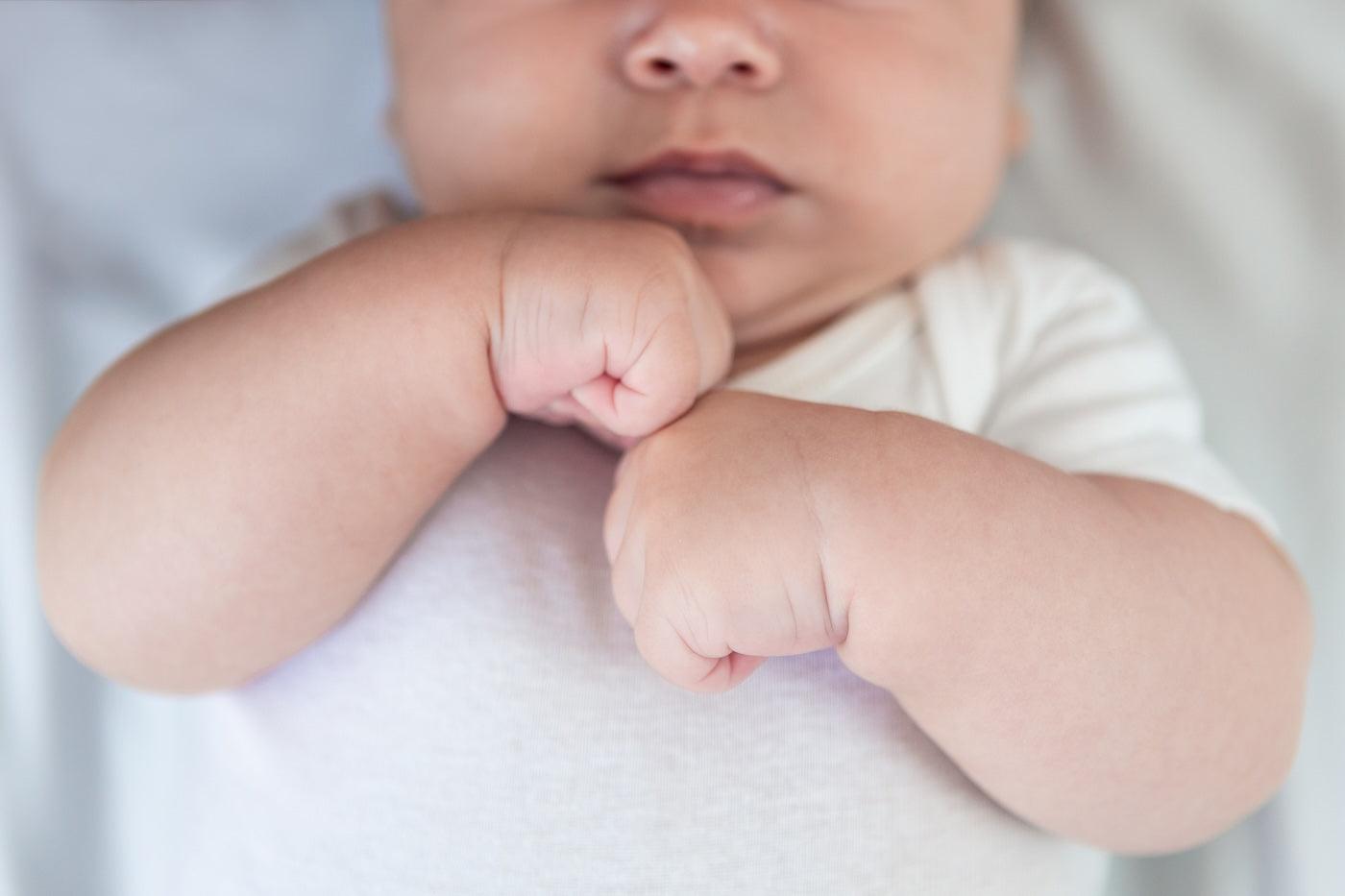
At every baby health check, your paediatrician or health visitor assesses developmental milestones you might not even realise are meaningful—like your baby's tiny clenched fists. But why do they matter so much?
Why do babies clench their fists?
You may have noticed that your newborn's hands are often tightly balled into little fists. Don’t worry—they’re not spoiling for a fight! Clenched fists are a completely normal part of early infancy. This tight hand clenching is one of several automatic reflexes your baby is born with.
Known as the palmar grasp reflex, this instinctive response causes your baby to hold on tightly when something touches their palm. It’s an evolutionary survival reflex that appears before birth and is often visible in scans. This reflex is at its strongest in the early weeks of life, and it’s the reason your baby can wrap their fingers firmly around yours.
But this grip isn’t voluntary—at least not yet. The clenched fists you see are a product of reflexive behaviour, not conscious movement. As your baby's brain and muscles mature, they’ll start gaining control over their hands, and those tight fists will begin to unfurl.
What clenched fists tell your paediatrician
At each routine baby check, your health professional looks for signs of expected developmental progress. Reflexes—including the palmar grasp—are an important part of this assessment. They help show whether your baby's nervous system is developing as it should.
Here’s how clenched fists typically progress:
- From birth to 8 weeks: It’s completely normal for babies to keep their hands tightly closed much of the time. This reflex helps with self-soothing and reflects normal neurological development.
- By 2 to 3 months: You’ll likely start seeing your baby open and close their hands more often. They may also begin to bat at toys or bring their hands to their mouth.
- By 4 months: Most babies begin to intentionally grasp and release objects. Fists should no longer be tightly clenched most of the time.
These changes are signs that your baby's fine motor skills are developing. Paediatricians and health visitors track them closely because they offer key insight into your baby’s brain and muscle growth.
When to worry about clenched baby fists
While clenched fists are expected in the early months, if your baby still keeps their hands tightly fisted past 6 months, it could be a red flag for delayed motor development.
Consistently clenched fists—especially when paired with stiff limbs, limited movement, or delays in reaching, sitting, or rolling—can sometimes be an early sign of a neurological condition such as cerebral palsy.
That said, an occasional clenched hand beyond 6 months isn’t usually a concern. But if you’re seeing this pattern often and noticing other delays, it’s worth discussing with your GP, paediatrician, or child health nurse. The earlier these issues are identified, the sooner support can be put in place.
How to support your baby’s hand development
Most babies naturally move from clenched fists to open hands and grasping—but here are some ways to gently support that journey:
- Tummy time: Supervised time on their tummy helps build neck, shoulder, and arm strength—all essential for hand control.
- Hand play: Gently massage and open your baby’s hands. Play simple games like “this little piggy” or “round and round the garden.”
- Easy-to-grasp toys: Offer soft, lightweight toys that encourage grasping and exploring with both hands.
And of course, offer plenty of floor time and loving interaction. Your attention and presence are some of the best tools for supporting all areas of your baby’s development.
The takeaway on tiny fists
While clenched fists are a hallmark of newborn life, they also give health professionals helpful insight into your baby’s neurological development. In most cases, clenched fists begin to relax around 2 to 3 months and give way to purposeful grasping by 4 months.
If you ever have concerns, bring them up at your baby’s next health check or GP visit. There’s no such thing as a silly question when it comes to your baby’s wellbeing.
REFERENCES
- American Academy of Pediatrics: Newborn Reflexes
- Brown Med-Peds Residency: Developmental Reflexes—A Disappearing Act
- DoveMed: Palmar Grasp Reflex—Exploring an Essential Infantile Reflex
- Centers for Disease Control and Prevention: Cerebral Palsy—About CP
Descargo de responsabilidad: La información en nuestro sitio NO es un consejo médico para ninguna persona o condición específica. Solo se proporciona como información general. Si tiene alguna pregunta o preocupación médica sobre su hijo o sobre usted mismo, por favor contacte a su proveedor de salud. La leche materna es la mejor fuente de nutrición para los bebés. Es importante que, en preparación para la lactancia y durante la misma, las madres lleven una dieta saludable y equilibrada. La combinación de lactancia materna y alimentación con biberón en las primeras semanas de vida puede reducir la producción de leche materna y es difícil revertir la decisión de no amamantar. Si decide utilizar fórmula infantil, debe seguir las instrucciones cuidadosamente.
Principales noticias






COMPARTIR ESTE ARTÍCULO
ELECCIONES DE LOS PADRES
Más vendidos