TODDLER
Smart Kitchen Safety Tips for Toddlers (and Their Grown-Ups!)
Keep your curious little cook safe in the kitchen!

Written by
Happiest Baby Staff
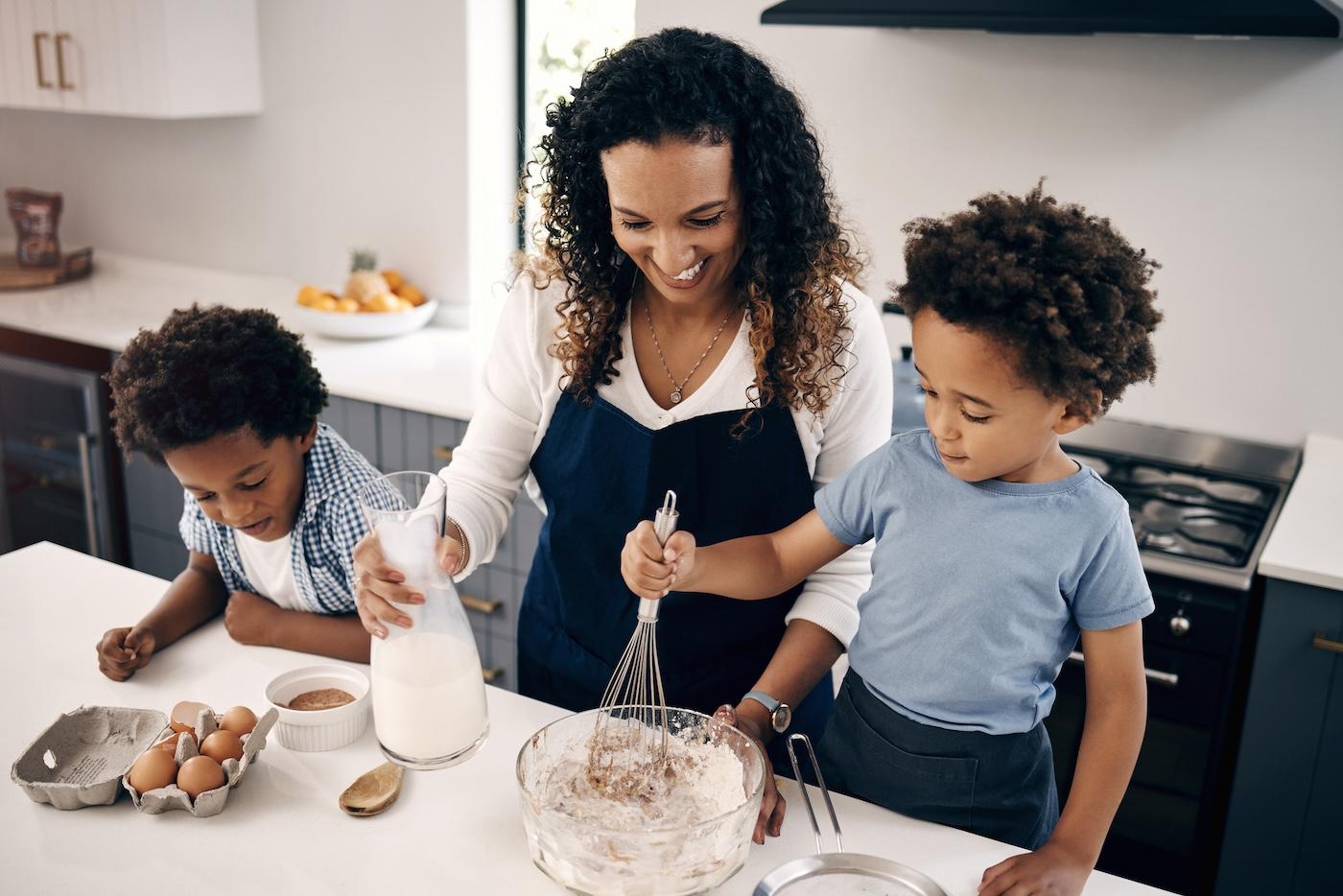
The kitchen is where so much family life happens—snacks, stories, and the nightly “what’s for dinner?” chorus. It’s also where heat, steam, sharp tools, cords, glass, and cleaning products all live…often right at toddler level. A few smart setup tweaks and calm, consistent routines can make this busy room feel welcoming—and safe—whether you’re cooking solo or your little helper is up on a stool beside you.
Set the Stage for Kitchen Safety
- Establish a hot zone. Decide where kids can be—and where they can’t—when heat is on. Some families like mark a “hot zone” on the floor (think: a piece of masking tape around the stove/oven). It’s a simple visual that helps toddlers understand boundaries: when something is cooking, only grown-ups go in the hot zone!
- Choose an insulated oven if you’re in the market for a new appliance and ensure it’s anchored to the wall.
- Don’t hang dish towels from appliances. Though the dishwasher or oven handle might seem like a handy place for towels, little ones could yank them and accidentally pull down the door.
- Keep dangerous objects out of reach. Do a slow lap of the room at toddler height. Move knives and breakables into high cabinets or latched drawers, coil and tuck appliance cords, and relocate step stools and chairs away from the stove so little climbers don’t wander into danger.
- Stow cleaning products safely. Detergent pods and other household chemicals should live up high and locked, not under the sink. (Those candy-colored pods are irresistibly tempting to small children.) If you need to keep anything under the sink, add a self-closing childproof latch. (Here are other household products to keep out of kids’ reach!)
- Don’t forget the dishwasher. Engage the child lock, and load knives and sharp tools spiky-side-down!
- Keep a working fire extinguisher nearby!
Kitchen Safety When You’re Cooking
Even if you establish a “hot zone,” assume that littles may still breach its borders. Keep a close eye on your kids and the kitchen when the stove and/or oven are in use and take steps to reduce risks:
- Make sure oven knobs are firmly in the off position and use knob covers to keep curious kiddos from accidentally turning on the stove.
- While using the stove turn pot handles toward the back and use the back burners when you can. Likewise, place hot mugs and pans toward the rear of the counter, and carry hot liquids “low and slow,” announcing that you’re coming through.
- Teach kids that the oven door, the toaster oven, the air fryer, and the edges of hot dishes can all burn.
- If your microwave is within reach, keep little hands away from opening it or removing dishes—steam burns are sneaky.
- If something spills, clean it up right away! Wet floors can lead to slips and falls.
Kitchen Safety When Kids Help
Cooking together is fantastic for language, fine-motor skills, and adventurous eating—as long as you’ve taken steps to keep it safe.
- Shift the action to the “cold side” of the kitchen! Keep that hot zone off-limits the whole time the stove or oven is on. Toddlers can rinse produce, tear lettuce, and sprinkle pre-measured ingredients. Preschoolers can wash greens, measure with help, spread with a butter knife, and cut soft foods with a child-safe knife. (See more age-appropriate ideas for how kids can pitch in at home!)
- Use kid-safe equipment. Swap breakable bowls for sturdy steel or pyrex. If you think your tot can handle cutting soft foods, equip them with kid-friendly tools, like this Mini Cutter from Piccalio, a crinkle cutter, or knives designed just for kids.
- Wash hands. Scrub before food prep and after handling food. This is an essential food safety habit that you can instill from a young age! (Here’s how to teach toddlers to wash their hands…the right way!)
- Limit tasting. That biscuit dough or cake batter’s going to be tempting, but don’t let your tyke taste raw egg and flour, both of which can contain icky germs that can lead to food poisoning.
- Keep sleeves rolled, hair tied back, and stools stable. This will prevent little mishaps big and small.
- Act fast if burns happen. Remove the heat source, then run cool (not cold) water over the burn—AAP guidance says about five minutes helps stop the burning process and eases pain. Skip ice and greasy home remedies! Cover the area with a clean, non-stick bandage and call your GP or paediatrician
A Quick Once-a-Week Check
Take 60 seconds every weekend to reset: Clear the stovetop, wipe errant grease (it can flare), return cords and knives to safe homes, and scan counters for magnets and other tiny “mouthable” objects. It’s the tidying equivalent of buckling a seat belt—small effort, big payoff.
More Safety Tips:
- A Stage-by-Stage Guide to Childproofing
- How to Prevent Choking in Little Ones
- How to Cut Food for Babies and Toddlers
***
REFERENCES
- Healthy Children: Kitchen Safety: 10 Tips for Families With Young Children
- KidsHealth: Being Safe in the Kitchen (for Kids)
- Nationwide Children’s Hospital: Home Safety Series: The Kitchen
- Clemson Extension / Home & Garden Information Center: Kids in the Kitchen
- University of Nebraska–Lincoln Extension: Kitchen Safety Rules for Kids
- Centers for Disease Control and Prevention: Raw Dough and Food Safety
Disclaimer: The information on our site is NOT medical advice for any specific person or condition. It is only meant as general information. If you have any medical questions and concerns about your child or yourself, please contact your health provider. Breastmilk is the best source of nutrition for babies. It is important that, in preparation for and during breastfeeding, mothers eat a healthy, balanced diet. Combined breast- and bottle-feeding in the first weeks of life may reduce the supply of a mother's breastmilk and reversing the decision not to breastfeed is difficult. If you do decide to use infant formula, you should follow instructions carefully.






SHARE THIS ARTICLE
PARENT PICKS
Bestsellers