PREGNANCY
32 Weeks Pregnant: Your Dreaming Baby
Your baby is not yet a chubby-cheeked cherub, but they're getting there!

Written by
Dr. Harvey Karp
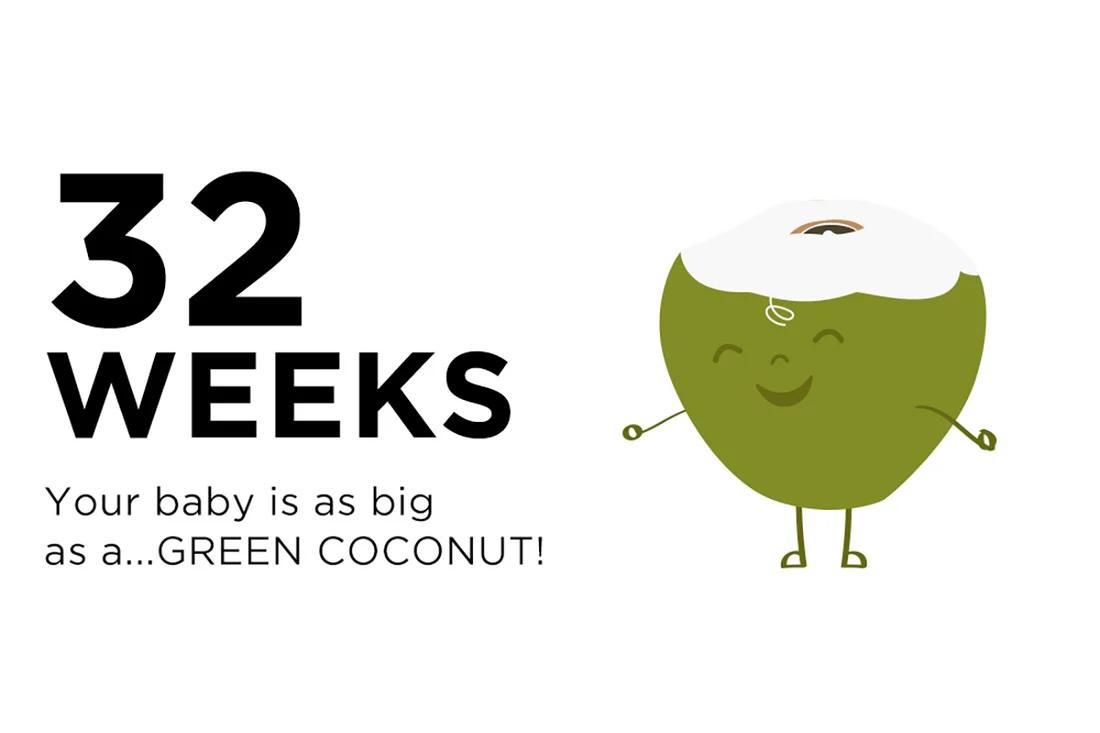
32 Weeks Pregnant: Baby Update
They're not yet the chubby-cheeked baby you may be picturing in your head, but they're getting there. This week, your baby hefts in at almost 4 pounds and 1 ½ feet long. They're adding fat to their skinny frame and their wrinkly, red skin is beginning to smooth.
32 Weeks Pregnant in Months
32 weeks pregnant is approximately 8 months.
Baby at 32 Weeks
By this week, the digestive system is almost ready to go. Your baby has been practicing their swallowing skills with little sips of amniotic fluid, which is—in large part—made from their pee. They have yet to take their first number 2 (that'll happen during or shortly after birth). Their bones are soft and pliable. Some babies already have a full head of hair at 32 weeks, others just peach fuzz. They have fingernails, too. (If you're having a boy, his testicles may have dropped into his scrotum by now…they started out inside his abdomen!)
Your little one is moving around and kicking a little less, not only because they're pretty tightly packaged—your belly is mostly baby now, whereas a few months ago it was mostly amniotic fluid—but also because they're sleeping so much of the time.
Research shows that by this age, a baby's brain waves are similar to an adult's while sleeping. During sleep, your baby is creating early memories (like the sound of your voice and familiar flavors—like garlic and basil—that float from your digestive tract, through your blood into their amniotic swimming pool). And, they are having REM (Rapid Eye Movement) sleep, aka active sleep. That’s the time when we dream. Wonder what they're picturing during their reverie?
32 Weeks Pregnant: What to Expect
You probably feel like a human pincushion these days! At your next prenatal visit, you'll likely get blood drawn for a few tests. Anemia increases your risk of preterm birth or low birth weight, and improper levels of hemoglobin, hematocrit and platelets can be downright dangerous during birth. That's because when the placenta detaches from your uterus, it leaves blood vessels open. Uterine contractions help to close those vessels until they heal, which is why most women have some spotting/bleeding for up to 6 weeks post-delivery.
By this point, you should be on a prenatal vitamin + an iron supplement. Take them together (vitamin C improves iron absorption.) During pregnancy, that iron helps keep you and your baby properly oxygenated and prevents you from feeling tired or weak, symptoms of anemia. (Although iron can make your poop green black and be a little constipating.)
You may be given another routine STD test. STDs can be treated or cured with medication, but your STD status also affects your delivery. Most hospitals will apply antibiotic ointment to a baby's eyes immediately after birth (some states mandate this by law, though parents can usually refuse it). This type of treatment dates back to the 1800s and is used to prevent blindness that would occur if the baby was exposed to gonorrhea.
32 Weeks Pregnant Symptoms
Common symptoms of 32 weeks pregnant include:
- Constipation
- Leg cramps
- Faintness or dizziness
- Hemorrhoids
- Colostrum (leaky breasts)
- Itchy tummy and skin
32 Weeks Pregnant To-Do List
- Add DHA to your diet: DHA is essential to baby brain development and is especially crucial during the last trimester. Low-mercury, oily fish such as salmon, mackerel, herring and sardines are great sources, as are oysters and mussels (cooked of course, and discard any shells that don't open). Vegans can take algae-derived DHA supplements or add flaxseeds and walnuts to their diet to up their omega-3 intake.
- Review your birth plan with your caregiver: Review your birth plan with your doctor or midwife. You might say, "I'd like as little intervention as possible" or "I trust you completely, but please always let me know what is going on…even if you have any concerns.” And, from there, ask specifics about anything that matters to you. Maybe positions in labor or pain medication or using a mirror to watch the baby coming out or holding your little one immediately after delivery. Ask for their advice and what most moms request.
- Whittle down your baby-name list: Whittle down your baby-name list. Be flexible in your plans. One couple in my practice named their son Jacob Madison for his first and middle names. They figured that way, if he wanted to run a deli he could be Jake and if he wanted to become a banker he could be J. Madison.
- Know the signs for preeclampsia: Call your care provider immediately if your hands or face suddenly swell, you get bad headaches, blurry vision or shortness of breath.
Pregnancy Quote of the Week
Whether your pregnancy was meticulously planned, medically coaxed, or happened by surprise, one thing is certain – your life will never be the same.—Catherine Jones
Disclaimer: The information on our site is NOT medical advice for any specific person or condition. It is only meant as general information. If you have any medical questions and concerns about your child or yourself, please contact your health provider. Breastmilk is the best source of nutrition for babies. It is important that, in preparation for and during breastfeeding, mothers eat a healthy, balanced diet. Combined breast- and bottle-feeding in the first weeks of life may reduce the supply of a mother's breastmilk and reversing the decision not to breastfeed is difficult. If you do decide to use infant formula, you should follow instructions carefully.






SHARE THIS ARTICLE
PARENT PICKS
Bestsellers