TODDLER
Toddler Night Lights and Other 8 Myths About Toddler Sleep
Myth #3: Toddlers need less sleep than infants.

Geschrieben von
Dr. Harvey Karp
Grandparents, neighbours and friends are full of parenting advice. Of course, they are all very well-meaning, but sometimes they are just flat-out wrong!
Here are some of the most common myths you may hear from them about toddler sleep.
Myth #1: A night light can hurt your baby’s vision.
Fact: Nope! Generations of parents have used dim night-lights (4 watts) in their infants’ bedrooms.
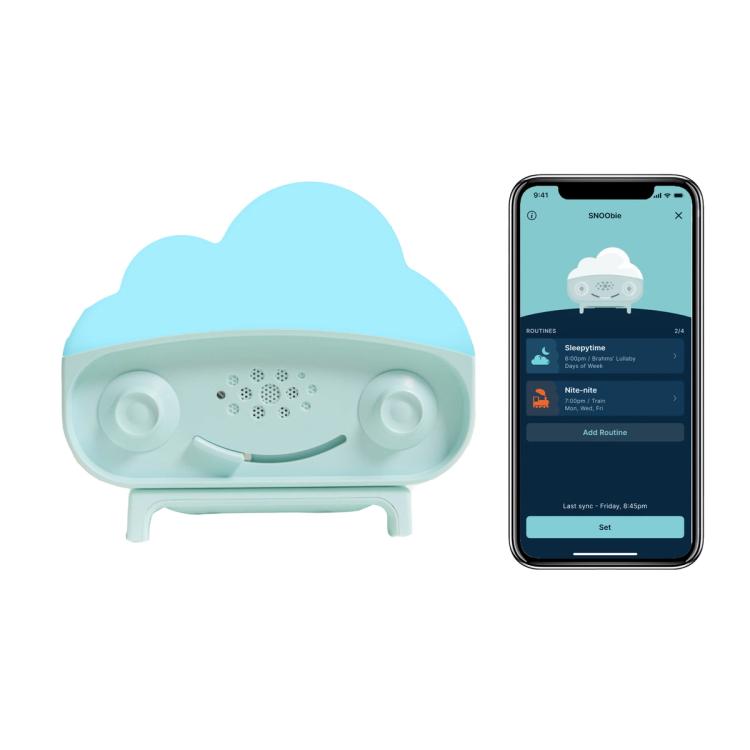
Do Toddlers need Night Lights?
Night lights allow us make a quick assessment of our child’s well-being without needing to turn on a bright flashlight or room light. Plus, many babies feel safer if they can see familiar surroundings when they awake at 2am…not just a gulf of darkness.
Are Night Lights Good or Bad for Baby Vision?
But a 1999 study from Children’s Hospital of Philadelphia scared many parents into switching the night lights off. Researchers said 34% of children who used a night light later became near-sighted.
Fortunately, in the next year, 2 new studies debunked this claim. Ohio scientists found that only 16.8% of the children in their study exposed to night lights for the first 2 years became near-sighted, compared with 20% of children who slept in darkness. Boston scientists also confirmed there was absolutely no association between night lights and vision problems.
Myth #2: It is normal for little kids to sleep alone.
Fact: Who really wants to sleep alone? In most cultures, young children sleep with their siblings or parents for years.
Parents are often surprised to learn that bed-sharing increases with age! At 3 years, 22% of kids are doing it; and at 4 years, 38% bed-share at least once a week. Even 10-15% of preschoolers still routinely bed-share.
Myth #3: Toddlers sleep all night.
Fact: Actually, video studies show that toddlers awaken from light sleep several times a night. But most of us never know this because our kids usually put themselves back to sleep without a sound.
Myth #4: Toddlers need less sleep than infants.
Fact: Although your toddler’s daytime sleep will steadily lessen as he gives up his 2 naps a day, he will still need 11-12 hours of nighttime sleep until he reaches 5 years. And, between 4 and 12 years of age, his night sleep will barely drop from 11 hours a day to 10.
Myth #5: Toddlers should give up their dummies, especially at night.
Fact: It is normal and very comforting to toddlers to suck. In most basic cultures, kids still suckle at the breast until they are 3 or 4 years old. Dummies can promote a child’s confidence and ability to self-soothe in the middle of the night.
Furthermore, many toddlers have a strong genetic tendency to suck. And it is definitely preferable for them to suck a dummy rather than get into the habit of thumb sucking, which is much more likely to cause long-term orthodontic problems.
Myth #6: A toddler’s sleep has nothing to do with his ability to learn or his health.
Fact: In addition to triggering a host of daytime behaviour problems like tantrums, crankiness, aggression, impulsivity, and defiance, sleep deprivation results in ‘3 strikes’ against learning: poor attention, poor knowledge acquisition, and poor memory.
Studies have also shown an association in little kids between too little sleep and health issues years later. Surprisingly, a reduction of just 1 hour of sleep a night during early childhood can affect school-age learning!
For example, Canadian researchers reported that getting less than 10 hours of sleep made toddlers and preschoolers twice as likely to be overweight, have hyperactivity, and do poorly on cognitive tests later in childhood.
It appears that there is a critical period in the early years when inadequate sleep habits improve later on.
Myth #7: Kids naturally fall asleep when they are tired.
Fact: While most of us (little kids included) fall asleep when we get exhausted, some toddlers actually get more awake! They become giddy and start running in circles. In fact, these toddlers can look like kids with attention-deficit/hyperactivity disorder (ADHD).
And this problem can escalate: the more tired they get, the harder it is for them to fall asleep, and the more times they awaken during the night.
Myth #8: Putting a telly in your toddler’s room can make bedtime better.
Fact: Tellies are a huge problem! Nearly a third of preschoolers have a telly in their room. (And 20% of infants do…yikes!) In addition, nearly a fifth of parents use the telly as part of their children’s bedtime routine. But using this electronic dummy at night is a bad idea.
Having a telly in a toddlers room during bedtime can actually disrupt and make it more difficult for your toddler to sleep. A study published by the Journal of Pediatrics showed that watching telly before bedtime leads to sleep problems, including difficulty falling or staying asleep.
Kids with a telly in the bedroom:
- Watch more telly (that means more violent programming and junk food commercials)
- Go to bed 20-30 minutes later
- Resist sleep (they are twice as likely to fall asleep after 10:00pm)
- Sleep less (they are twice as likely to have trouble awakening in the morning)
- Exercise less
- Have more psychological stress (and perhaps more nightmares)
- Have a higher risk of becoming overweight and obese
- Can get seriously injured by pulling the telly set on top of themselves
What You Should Do to Make Sure Your Toddler Sleeps Well
Now, I am not a total puritan about the telly. It can be a real help as a short-term babysitter…and sometimes we all need that. But use the telly sparingly (picking gentle shows like Sesame Street and nature videos), and turn it off well before bedtime. Better yet, save telly time for special occasions…like weekend mornings when it will be a special treat for your little bud, and it may allow you snooze an extra 30 minutes.
If you are looking for more tips for helping your toddler sleep, then be sure to check out “Happiest Toddler on the Block,” one of the top toddler books for reducing tantrums, improving sleep, and raising a patient, respectful child.
Haftungsausschluss: Die Informationen auf unserer Website sind KEINE medizinischen Ratschläge für eine bestimmte Person oder einen bestimmten Zustand. Sie sind lediglich als allgemeine Informationen gedacht. Wenn Sie medizinische Fragen und Bedenken bezüglich Ihres Kindes oder Ihrer eigenen Gesundheit haben, wenden Sie sich bitte an Ihren Gesundheitsdienstleister. Muttermilch ist die beste Quelle der Ernährung für Babys. Es ist wichtig, dass Mütter in Vorbereitung auf das Stillen und währenddessen eine gesunde, ausgewogene Ernährung zu sich nehmen. Die Kombination von Stillen und Flaschenernährung in den ersten Lebenswochen kann die Muttermilchversorgung verringern und die Entscheidung, nicht zu stillen, ist schwer rückgängig zu machen. Wenn Sie sich entscheiden, Säuglingsnahrung zu verwenden, sollten Sie die Anweisungen sorgfältig befolgen.
Top-Nachrichten






DIESEN ARTIKEL TEILEN
ELTERN WAHL
Bestseller