TODDLER
How to Teach Kids to Wash Their Hands...the Right Way!
One of the best ways to protect your kiddo from getting sick is to teach them how—and when—to wash their hands.

Geschrieben von
Happiest Baby Staff
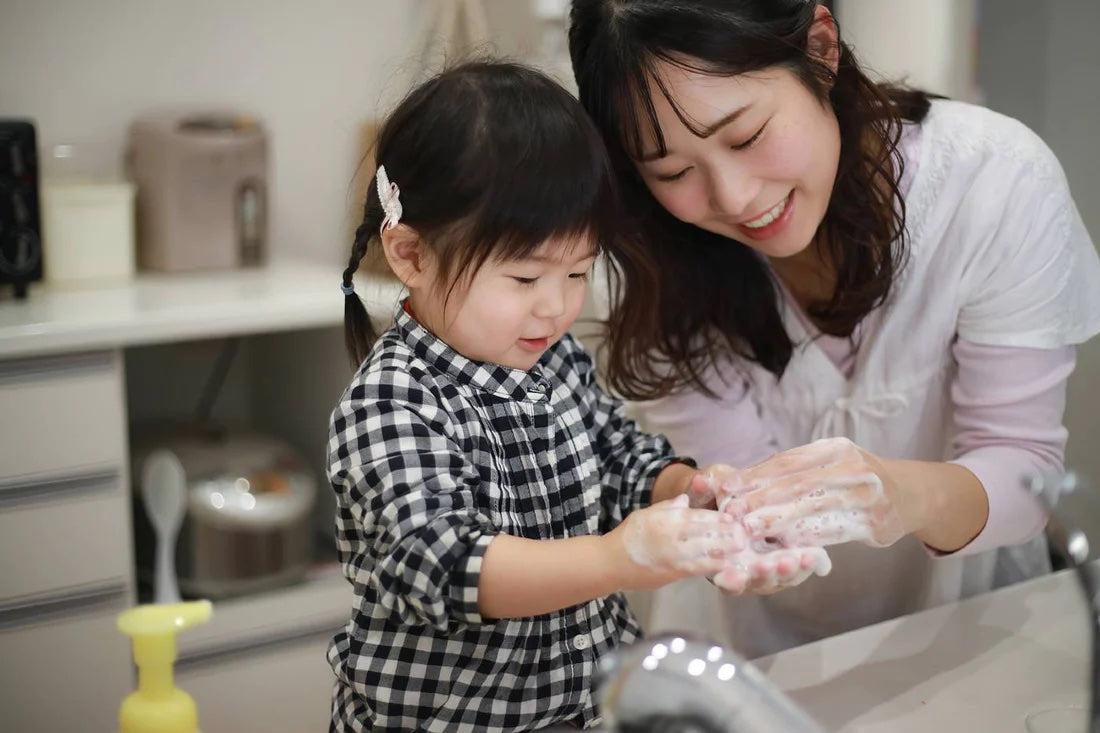
Put on your pyjamas! Brush your teeth! Wash your hands! When you’re a parent, these simple commands pepper your every day. But the activities themselves aren’t so simple. Children aren’t born knowing how to properly suds and scrub their hands clean…a grownup needs to teach them. After all, handwashing is one of the best ways to protect your kiddo—and your whole family—from getting sick. The Centers for Disease Control and Prevention (CDC) notes that proper hand washing can prevent roughly 33% of diarrhea-related illnesses and 1 in 5 respiratory infections, like hand-foot-mouth disease, the common cold, and the flu. Need help teaching your child how to wash their hands? Here, our no-fuss guide to getting your child into the hand washing habit.
Teach kids to wash their hands early.
There’s no perfect time to start teaching children to wash their hands. Instead, it’s a habit that parents should expose little ones to early and often. That said, a child as young as 2 years old can be taught to recognise the importance of hand-washing—even if you are the one who’s actually doing the washing for them. Between the ages of 3 and 4, most children can wash their hands independently.
Explain why you wash your hands.
Why? is the question of toddlerhood, so it’s no surprise that tots want to know why they need to wash their hands. Explain to your tyke that hand washing helps prevent them from getting sick and making other people sick, too. But why? There are teeny tiny organisms called germs that get on our hands after we do things like use the potty, play in the dirt, or sneeze. We need to wash those germs off because they can make you sick and when you’re sick you miss out on having fun!
For more help explaining the whys of handwashing, reading your bub books has been shown to be a successful tool in improving 4- and 5-year-olds handwashing practices. Try Sick Simon, Wash Your Hands, Mr. Panda, Do Not Lick This Book (written by a kid-friendly microbiologist), and A Germ’s Journey.
Be a good handwashing example.
Lead by example! Young children learn best by copy-catting the behaviours they see from their very favourite adults and big kids. That means, when you make handwashing part of your must-do routine, you’re setting a fantastic example for your children to follow. To help hit the “handwashing is important” notion home, narrate to your child when and why you’re washing your hands. For example, “Mummy always washes her hands before making dinner” or “I just cleaned Fluffy’s litter box, so I need to wash my hands right away!”
Teach the five steps of handwashing.
There are five easy-to-understand steps to follow to ensure clean hands. Break down each one for your kiddo
Step 1: Wet hands. Turn on the faucet and let your child’s hands get nice and wet. Since it doesn’t matter if the water is warm or cold, keep water on the cooler side so children don't accidentally burn themselves. Turn off the tap.
Step 2: Get soapy. Both bar and liquid soap work great at removing germs, so choose whatever is easiest for your kiddo. Dr. Harvey Karp recommends skipping antibacterial soap. Studies show that there’s no added benefit, plus their harsh chemicals can be rough on little one’s skin.
Step 3: Rub a dub! Soap and water alone are not enough to get the job done. It’s important to have your child scrub their hands—palms, the back of their hands, between their fingers—for at least 20 seconds, which is the “Happy Birthday” sung twice. Experts note that kids tend to concentrate on their palms, but often neglect their wrists and thumbs.
Step 4: Rinse. Have your tot hold their hands under clean, running water. Rub them to rinse them fully.
Step 5: Dry off. Paper towels, public bathroom air dryers, and clean cloth towels are all effective ways to dry hands. Since germs spread more easily when hands are wet, make sure your child's paws are totally dry.
Emphasise handwashing at these important times.
Encourage your kiddo to wash their hands throughout the day, stressing these times as the best times to get the job done:
- Before eating meals or snacks
- After using the bathroom
- After playing outdoors
- After petting any animal
- After handling pet food or treats
- After sneezing or coughing if used hand to cover mouth
- After touching garbage
- When hands are visibly dirty or greasy
- After contact with frequently touched objects, like door handles and shopping carts
And for parents, it’s also important to wash hands…
- Before, during, and after preparing food
- Before and after caring for someone who’s vomiting or has diarrhea
- Before and after treating a cut or wound
- After changing nappies
- After cleaning up a child who has used the toilet
- After handling animal waste
What about hand sanitiser?
Washing little hands with soap and water is always the best way to get rid of germs. But if you’re out-and-about with no sink around, it’s okay to use a hand sanitiser that contains at least 60% alcohol. (Hand sanitizing wipes with at least 60% alcohol work, too.) But know that hand sanitiser does not eliminate all types of germs, and it doesn’t work well when hands are visibly dirty or greasy. Here’s how to use hand sanitiser with little ones:
- Keep hand sanitisers out of your child’s reach. It can be very easy for kiddos to access small bottles in nappy bags, cars, and purses.
- Supervise! Children 5 and younger need your help and supervision with using hand sanitiser.
- Apply gel to the palm of one hand. Squirt a pea-sized blob onto one their palm.
- Rub hands together. Have your tot rub the hand sanitiser on every part of their hands and fingers until it’s completely dry. This’ll take about 20 seconds. (For babies, you do the rubbing in.)
Do baby wipes clean hands?
No! While a quick once over with a baby wipe can make your hands look clean, baby wipes are not designed to remove germs and should not be used to clean your hands, notes the CDC. At the same time, disinfecting wipes that you may use to clean your counters are designed to kill germs on surfaces. Don’t use them to clean your skin!
How to Encourage Handwashing
The easiest way to make hand-washing a habit is to make it fun! Here are some fun strategies and products to help your kiddo embrace hand washing:
Get a step stool. There are plenty of options out there to fit your personal aesthetic, but if you’re looking for silly (and sturdy), consider the taller-than-most Bumbo step stool that’s playfully designed to look like an elephant’s foot.- Customise your handwashing song. While singing “Happy Birthday” twice is the usual go-to, know that the ABCs and “Twinkle, Twinkle, Little Star” work, too. You can also plug your kiddo’s fave song into Wash Your Lyrics and get an instant lyric-timing-visualization mashup.
- Use a timer. Not everyone wants to sing while they wash their hands. If your toddler is one of them, place a kid-friendly hand washing timer by the sink to help them count down from 20.
- Gossip about your kiddo’s good hygiene. Let your child overhear you praise them for their good handwashing efforts in a loud whisper. With your tot nearby, whisper your compliment to someone else, even a stuffed bear, even cupping your hand over your mouth as if you’re trying to keep a secret. (“Mr. Bear, I was so happy that Lydia washed her hands after coming in from the backyard.”) Later, repeat the same praise to someone else. Your tyke will be pleased and think, Wow, this must be true, because I’m hearing it a lot lately, making them want to repeat the good behaviour. (Learn more about the good in gossiping.)
- Start a stamp challenge. In the morning, mark the back of your child’s hand with their favourite rubber stamp…then at bedtime, check if it’s gone!
- Try a faucet extender. Handy dandy faucet extenders help bring the water to where your tot can safely reach it.
- Make a visual reminder. Consider making an illustrated and laminated version of the five steps of handwashing to keep by your bathroom sink.
- Get good soap. Fun-up your soap game by getting a cute soap dispenser (like this adorable duck), toy-inside glycerin soaps, or fruity and foamy pump soap.
***
REFERENCES
- Centers for Disease Control and Prevention (CDC): Handwashing: A Family Activity
- The Well by Northwell: How To Get Your Kids To Wash Their Hands—And Do It Correctly!
- Improving young children's handwashing behaviour and understanding of germs: The impact of A Germ's Journey educational resources in schools and public spaces. PLoS One. November 2020
- CDC: When and How to Wash Your Hands
- CDC: Frequent Questions About Hand Hygiene
- CDC: Show Me the Science – When & How to Use Hand Sanitizer in Community Settings
- American Academy of Pediatrics: Hand Sanitizers: Keep Children Safe from Poisoning Risk
- CDC: Keeping Hands Clean
Haftungsausschluss: Die Informationen auf unserer Website sind KEINE medizinischen Ratschläge für eine bestimmte Person oder einen bestimmten Zustand. Sie sind lediglich als allgemeine Informationen gedacht. Wenn Sie medizinische Fragen und Bedenken bezüglich Ihres Kindes oder Ihrer eigenen Gesundheit haben, wenden Sie sich bitte an Ihren Gesundheitsdienstleister. Muttermilch ist die beste Quelle der Ernährung für Babys. Es ist wichtig, dass Mütter in Vorbereitung auf das Stillen und währenddessen eine gesunde, ausgewogene Ernährung zu sich nehmen. Die Kombination von Stillen und Flaschenernährung in den ersten Lebenswochen kann die Muttermilchversorgung verringern und die Entscheidung, nicht zu stillen, ist schwer rückgängig zu machen. Wenn Sie sich entscheiden, Säuglingsnahrung zu verwenden, sollten Sie die Anweisungen sorgfältig befolgen.
Top-Nachrichten






DIESEN ARTIKEL TEILEN
ELTERN WAHL
Bestseller