TODDLER
Bunk Beds: Safety Tips for Toddler Bunk Beds
Expert recommendations on bunk beds and sleep safety for tots.

Geschrieben von
Dr. Harvey Karp
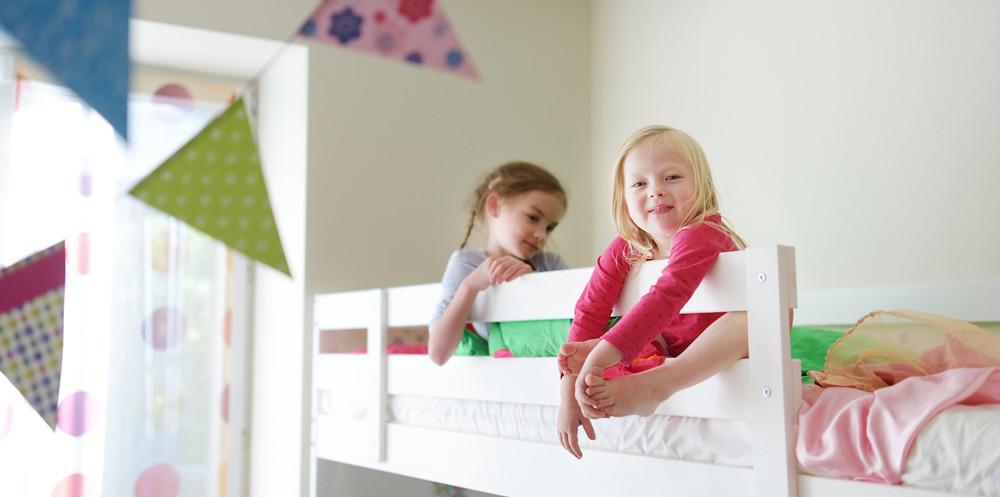
Toddler Bunk Bed Safety
Being tired makes kids wired, and this wildness can easily lead to accidents. Just as a tired juggler starts dropping things, tired tots get impulsive and klutzy and prone to all sorts of mishaps.
For preschoolers, the most common bed-related accidents (other than falling out of the crib) result from jumping on the bed or falling out of a bunk bed. I know it’s hard to enforce the “no more monkeys jumping on the bed” rule…but how crazy do you have to be to let a 4-year-old sleep in a top bunk bed? If you know of any parents who let their tots do this, tell them that there are more than 35,000 ER visits each year linked to bunk bed falls…with most of them happening to kids 3 and 5! Worse still, these tend to be head injuries.
Ages for Bunk Beds: Is a Bunk Bed Safe?
Every bunk bed is required to have a warning label that states that no child under 6 years of age or younger is to sleep in the top bunk of a bunk bed. More bunk bed safety guidelines below.
Bunk Bed Safety Guidelines from the Consumer Product Safety Commission
- Children younger than 6-years-old should never sleep in the upper bunk.
- Parents should use night-lights to help kids see where they’re going when they climb down from the top bunk.
- Kids should not be allowed to play on upper bunk beds.
- Parents should avoid placing bunk beds close to ceiling fans or other ceiling fixtures.
Toddler Bunk Beds: How Do You Make a Bunk Bed Safer?
Follow the tips below to make bunk beds as safe as possible at home.
- Ban horseplay and playing on the beds.
- Make sure the top bunks slats are supported.
- Make sure there are no exposed slats or posts where your child can hit his head.
- Make sure there is a ladder to the top bunk and it is properly secured.
- Install a guardrail for the top bunk to ensure children don’t roll off the bed.
- Position the bunk beds in a corner of the room.
Final Thoughts on Bunk Beds for Toddlers
Bunk beds are a great way to maximize space in a bedroom for two children sharing a room. But it’s important that parents follow the above tips to make sure the bunk beds are safe for their children. And finally––I know I’ve said this before, but I’m a baby doctor, so I have to keep saying it––always have working fire alarms, fire extinguishers and an escape plan in case of fire.
If you follow these simple rules, your little monkey should sleep safely and soundly...and that will make it much easier for you to snooze happily, too.
Haftungsausschluss: Die Informationen auf unserer Website sind KEINE medizinischen Ratschläge für eine bestimmte Person oder einen bestimmten Zustand. Sie sind lediglich als allgemeine Informationen gedacht. Wenn Sie medizinische Fragen und Bedenken bezüglich Ihres Kindes oder Ihrer eigenen Gesundheit haben, wenden Sie sich bitte an Ihren Gesundheitsdienstleister. Muttermilch ist die beste Quelle der Ernährung für Babys. Es ist wichtig, dass Mütter in Vorbereitung auf das Stillen und währenddessen eine gesunde, ausgewogene Ernährung zu sich nehmen. Die Kombination von Stillen und Flaschenernährung in den ersten Lebenswochen kann die Muttermilchversorgung verringern und die Entscheidung, nicht zu stillen, ist schwer rückgängig zu machen. Wenn Sie sich entscheiden, Säuglingsnahrung zu verwenden, sollten Sie die Anweisungen sorgfältig befolgen.
Top-Nachrichten






DIESEN ARTIKEL TEILEN
ELTERN WAHL
Bestseller