PREGNANCY
8 Weeks Pregnant: Hang that Ultrasound Up!
Your baby is growing by leaps and bounds, and...so are you!

Geschrieben von
Dr. Harvey Karp
8 Weeks Pregnant: Baby Update
Your baby is growing quickly…and so are you! Right now, your uterus is about the size of a grapefruit. It’s still tucked low in your pelvis, but it will keep expanding upwards—eventually reaching your belly button and beyond.
Safely nestled in this strong muscle, your baby is beginning to make tiny movements. They may even kick or startle—but you won’t feel those flutters just yet.
They’re starting to look more recognisably like a little baby, too. Their knees, elbows, and ears are forming, and their fingers and toes are no longer webbed. They’ve even developed eyelids, though their eyes will stay shut for another 20 weeks or so.
How Many Months Is 8 Weeks Pregnant?
At 8 weeks, you’re about 2 months along.
Baby’s Size at 8 Weeks
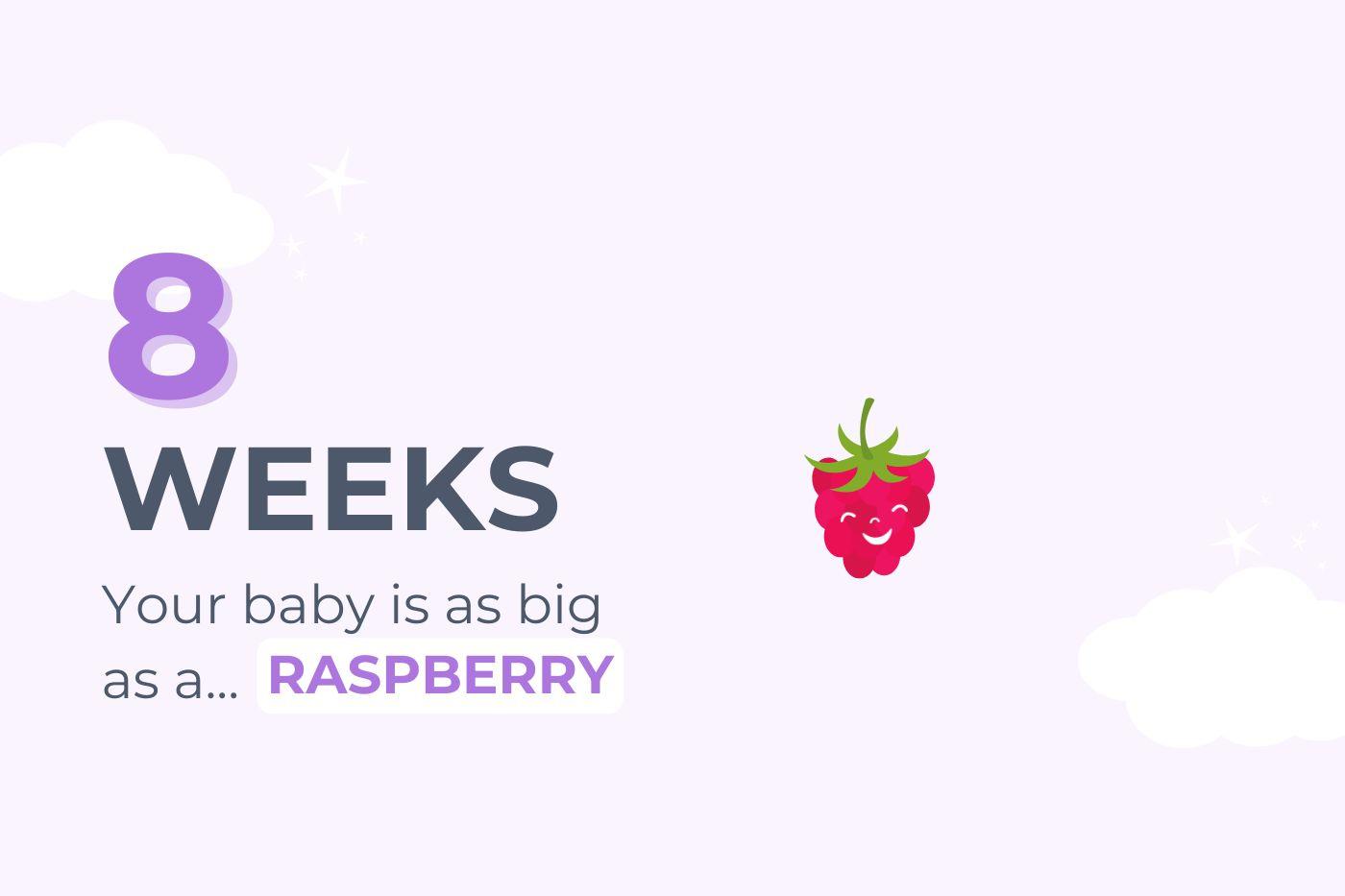
Your baby is about the size of a raspberry.
8 Weeks Pregnant: What to Expect
Congratulations—you’re finishing your second month of pregnancy! Things may feel more real now, especially if you’re heading to your first antenatal appointment. This is often when you’ll see your “gummy bear” baby on an ultrasound and hear the whoosh-whoosh of their tiny heartbeat.
Bring along a list of questions—no concern is too small or silly. This is the time to get answers.
Good topics to discuss with your midwife or doctor:
- Which over-the-counter medicines are safe (and which to avoid)
- Foods to steer clear of during pregnancy (like soft cheeses, certain fish, and deli meats)
- Any symptoms or changes you’ve noticed in your body
Pregnancy Symptoms at 8 Weeks
By now, you may be noticing:
- Morning sickness: Nausea and vomiting are common thanks to hormone changes. Food and smell aversions may also kick in. To ease nausea, try nibbling on plain crackers (keep some beside your bed), sip ginger tea, chew crystallised ginger, or try ginger lozenges. Staying hydrated is also key. If it’s severe, or you can’t keep fluids down, talk to your midwife or GP—medication may help.
- Digestive changes: Bloating, diarrhoea, or an unsettled tummy can also appear, thanks to the same hormones. These usually improve by the second trimester.
- Fatigue: Even though your baby is still tiny, your body is working overtime. Listen to your body, slow down when you need to, and rest often.
8 Weeks Pregnant To-Do List
- Write down questions for your first antenatal visit.
- Discuss when to share your news. Many parents wait until the second trimester, when miscarriage risk drops, but it’s a personal choice.
- Take care of yourself and your baby. Eat well, drink plenty of water, and keep up gentle exercise if your care provider says it’s safe.
Myth or Fact?
Mosquitoes prefer pregnant people.
True! Studies suggest pregnant people are about twice as attractive to mozzies, possibly due to higher body temperature or increased carbon dioxide from heavier breathing. Mosquitoes also seem to prefer type O blood over A or B.
To keep them at bay, try oil of lemon eucalyptus for a natural repellent. DEET-based repellents are considered safe in pregnancy—just avoid spraying directly on large areas of bare skin. Instead, dab a little on clothing like socks, cuffs, or collars.
Haftungsausschluss: Die Informationen auf unserer Website sind KEINE medizinischen Ratschläge für eine bestimmte Person oder einen bestimmten Zustand. Sie sind lediglich als allgemeine Informationen gedacht. Wenn Sie medizinische Fragen und Bedenken bezüglich Ihres Kindes oder Ihrer eigenen Gesundheit haben, wenden Sie sich bitte an Ihren Gesundheitsdienstleister. Muttermilch ist die beste Quelle der Ernährung für Babys. Es ist wichtig, dass Mütter in Vorbereitung auf das Stillen und währenddessen eine gesunde, ausgewogene Ernährung zu sich nehmen. Die Kombination von Stillen und Flaschenernährung in den ersten Lebenswochen kann die Muttermilchversorgung verringern und die Entscheidung, nicht zu stillen, ist schwer rückgängig zu machen. Wenn Sie sich entscheiden, Säuglingsnahrung zu verwenden, sollten Sie die Anweisungen sorgfältig befolgen.
Top-Nachrichten




DIESEN ARTIKEL TEILEN
ELTERN WAHL
Bestseller