PREGNANCY
28 Weeks Pregnant: Seeing the Light!
Your baby's survival rate is now 90%—and her odds keep getting better!

Geschrieben von
Dr. Harvey Karp
Your Baby at 28 Weeks
Your baby’s eyes can now sense light, and they’re opening and closing in the dim red glow of the womb. Your little one may even be sticking out their tongue to taste the amniotic fluid around them. It takes about 45 minutes for flavours from your last meal to drift into that fluid—so in that sense, you really are eating for two!
Your bub is also practising the little coughs, hiccups, and sucking motions they’ll use after birth. Meanwhile, your baby’s brain, which was once smooth, is now developing grooves and folds that will deepen over time, gradually taking on the appearance of an adult brain.
Size of Baby at 28 Weeks Pregnant
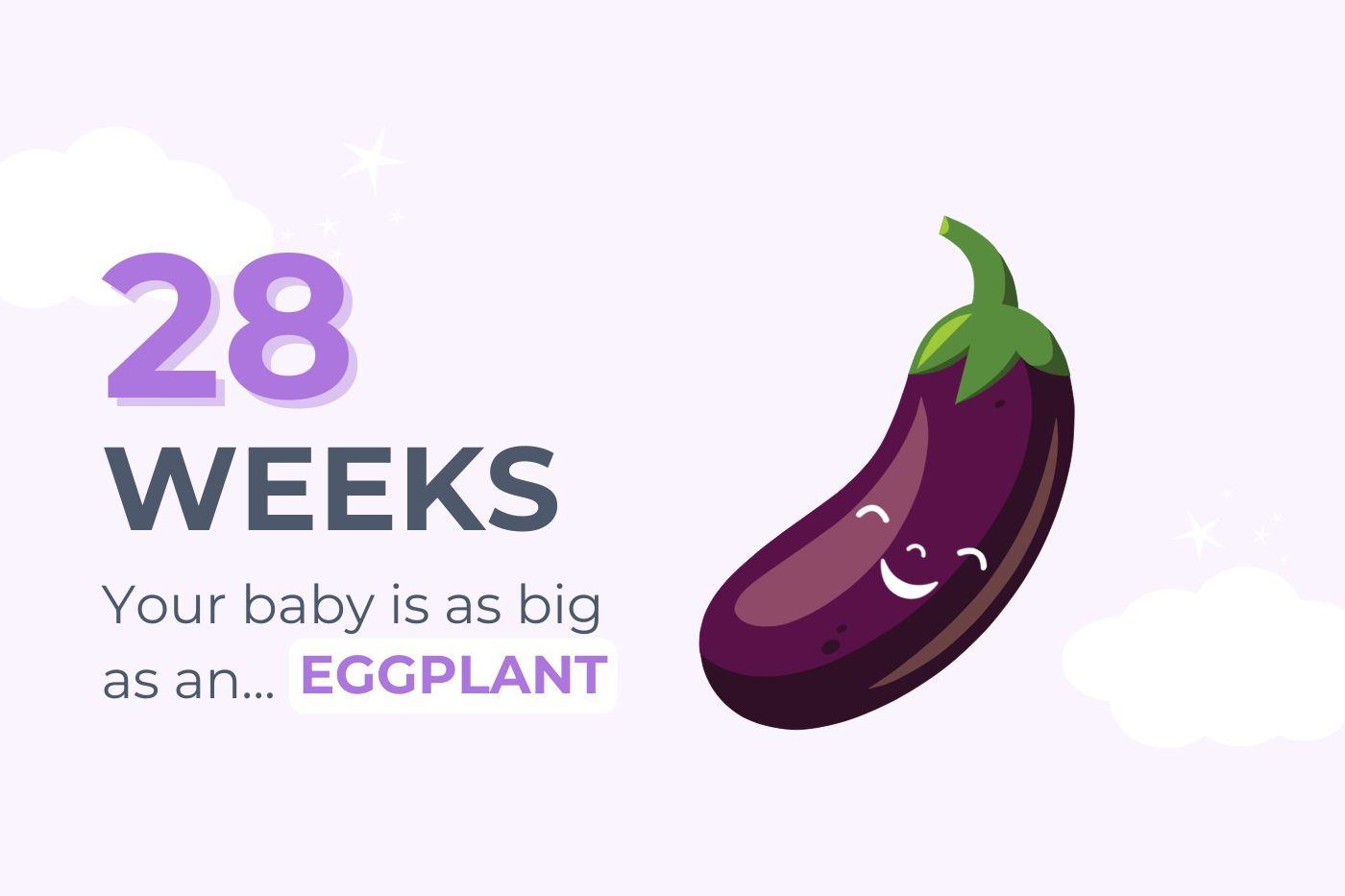
Your baby is about the size of an aubergine (eggplant)!
They’re still quite small—around 1 to 1.1 kilograms and 40 centimetres long. Even so, if your baby were born this week, their survival rate would be about 90%—and those odds keep improving each week.
By now, some babies have already wriggled into a head-down position in preparation for the big day.
28 Weeks Is How Many Months?
If you’re 28 weeks pregnant, you’re roughly 6 months along.
28 Weeks Pregnant: What to Expect
In the UK and Australia, health authorities encourage mums-to-be to keep active throughout pregnancy if there are no complications. That doesn’t just mean yoga—gentle aerobic exercise and light strength training can be beneficial right through to birth.
Bed rest, once a common recommendation, is now rarely prescribed. Research shows it doesn’t reliably prevent preterm labour and may even cause side effects such as muscle loss, weaker bones, blood clots, and low mood. That said, in some situations (like carrying multiples or an early-opening cervix), your doctor or midwife might still advise some level of rest.
The bottom line: whether or not you’re considered high-risk, it’s important to listen to your body, avoid overdoing it, drink plenty of water, keep stress low, and get enough sleep. Always check with your midwife or doctor about what’s right for you.
28 Weeks Pregnant Symptoms
At 28 weeks, you may notice:
- Bloating and wind
- Dizziness or faintness
- Blocked or stuffy nose
- Bleeding gums
- Pelvic pain (including symphysis pubis dysfunction)
- “Mask of pregnancy” (skin darkening on the face)
- Needing to wee more often
28 Weeks Pregnant To-Do List
Book your antenatal appointments: From now until 36 weeks, you’ll see your midwife or doctor every two weeks. After 36 weeks, you’ll go in weekly. Appointments can fill up quickly, so it’s smart to get these in the diary early.
Think about placenta encapsulation: Eating the placenta (placentophagy) has gone from fringe practice to celebrity trend. Some women say it helps them recover faster, though scientific evidence is limited. If you’d like your placenta encapsulated, you’ll need to arrange this ahead of time with a trained provider.
Track your baby’s movements: In the third trimester, many midwives recommend daily kick counts. Pick a time when your baby is usually active, lie on your left side or sit comfortably with a hand on your bump, and count how long it takes to feel 10 movements (kicks, rolls, or squirms). You should feel 10 within two hours—though most babies move far more often. If you notice fewer movements than usual or a sudden change in pattern, call your midwife or maternity unit straightaway.
Boost your iron intake: Anaemia is common in late pregnancy. If you’re not already taking an iron supplement, talk to your midwife or GP about starting one. Many guidelines recommend around 30mg a day. Pairing iron with vitamin C (like a squeeze of lemon over spinach, beans, lentils, or red meat) helps your body absorb it. High doses can cause constipation, so balance it with plenty of fibre and fluids.
Pregnancy Quote of the Week
She never quite leaves her children at home, even when she doesn’t take them along. — Margaret Culkin Banning
Haftungsausschluss: Die Informationen auf unserer Website sind KEINE medizinischen Ratschläge für eine bestimmte Person oder einen bestimmten Zustand. Sie sind lediglich als allgemeine Informationen gedacht. Wenn Sie medizinische Fragen und Bedenken bezüglich Ihres Kindes oder Ihrer eigenen Gesundheit haben, wenden Sie sich bitte an Ihren Gesundheitsdienstleister. Muttermilch ist die beste Quelle der Ernährung für Babys. Es ist wichtig, dass Mütter in Vorbereitung auf das Stillen und währenddessen eine gesunde, ausgewogene Ernährung zu sich nehmen. Die Kombination von Stillen und Flaschenernährung in den ersten Lebenswochen kann die Muttermilchversorgung verringern und die Entscheidung, nicht zu stillen, ist schwer rückgängig zu machen. Wenn Sie sich entscheiden, Säuglingsnahrung zu verwenden, sollten Sie die Anweisungen sorgfältig befolgen.
Top-Nachrichten






DIESEN ARTIKEL TEILEN
ELTERN WAHL
Bestseller