PARENTS
So sprichst du mit Betreuungspersonen über sicheres Schlafen
Wir helfen dir bei diesen etwas unangenehmen, aber sehr wichtigen Gesprächen.

Geschrieben von
Happiest Baby Staff
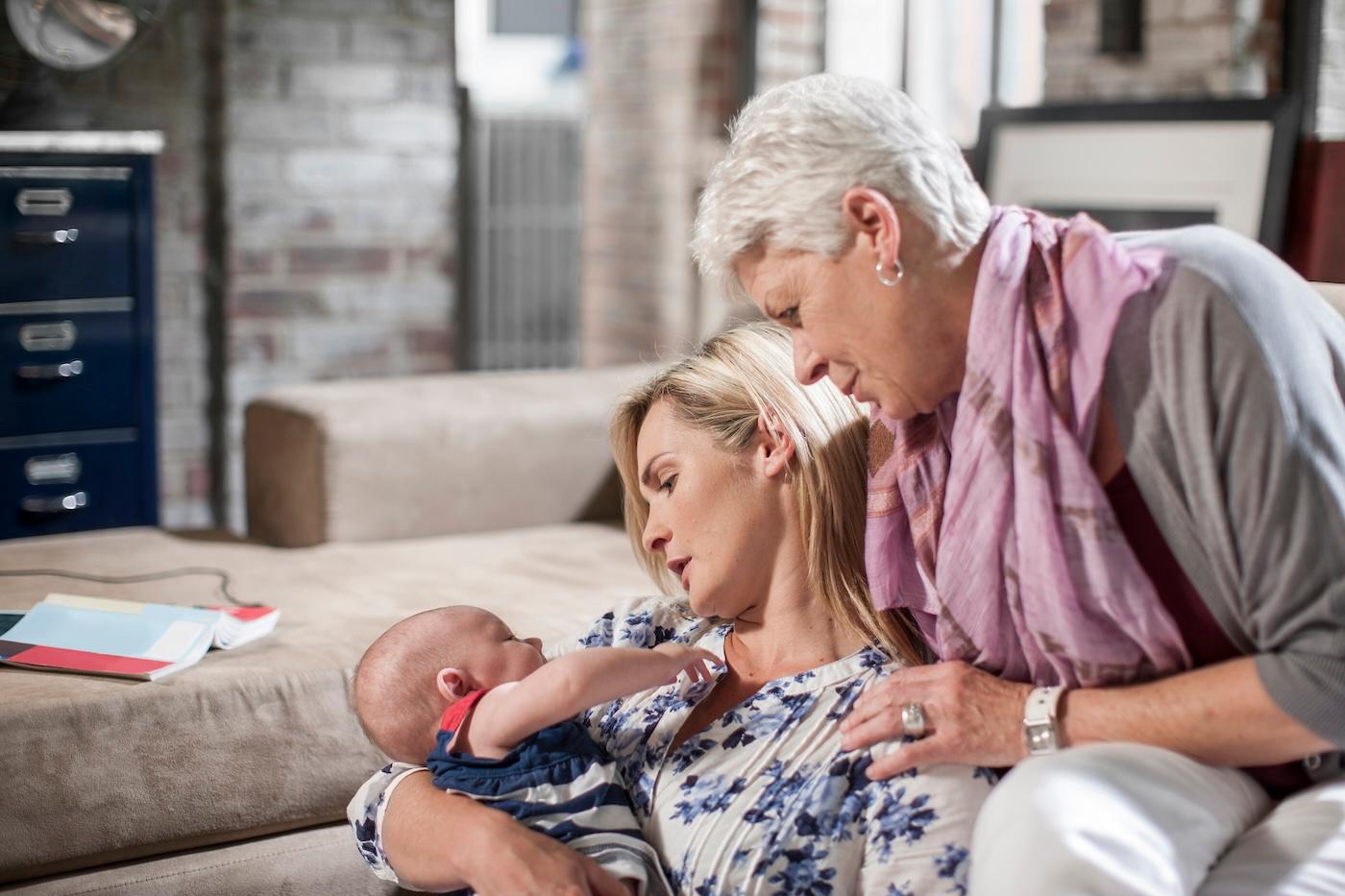
Klartext: Es ist nicht leicht, deiner Mutter zu sagen, die sich so lieb bereit erklärt hat, an einem kalten Tag auf das Baby aufzupassen, dass sie es nicht mit einer Decke zudecken darf … auch wenn sie das bei dir früher immer so gemacht hat. Es ist unangenehm, deinem Vater zu sagen, dass er mit deinem Neugeborenen nicht auf dem Sofa dösen darf … oder der hochgelobten Babysitterin zu sagen, dass sie dein Baby nicht auf dem Bauch schlafen legen darf. Aber du musst es tun – und hier ist der Grund: Fast 14 % der Babys, die im Schlaf sterben, werden in diesem Moment von jemand anderem als ihren Eltern betreut.
Und von diesen tragischen Todesfällen, die unter der Aufsicht anderer passieren, werden Babys häufiger auf dem Rücken oder auf der Seite gefunden, in einer unsicheren Schlafumgebung (zum Beispiel auf einem Sofa oder in einem Erwachsenenbett) oder mit Gegenständen im Schlafbereich.
Auch wenn es ein ganzes Dorf braucht, um Babys im Schlaf sicher zu halten, wissen wir, dass diese Gespräche schwierig und unangenehm sein können. Genau deshalb sind wir hier, um dir zu helfen, die richtigen Worte zu finden.
Fragen an deine Betreuungsperson
Bevor du eine neue Betreuungsperson – egal ob Familienmitglied oder bezahlte Fachkraft – mit der Pflege deines Kindes betraust, ist es eine gute Idee, sicherzustellen, dass ihr beim Thema Schlaf auf einer Wellenlänge seid.
Hier sind ein paar Fragen, die du stellen kannst:
- Kann ich mir anschauen, wo die Babys schlafen?
- Verwendest du manchmal Decken, Kissen, Kuscheltiere, andere weiche Gegenstände oder Nestchen im Kinderbett?
- Wie legst du Babys zum Schlafen hin?
- Was machst du, wenn ein Baby im Autositz, in einer Babyschaukel oder in einer Wippe einschläft?
- Wird das Baby irgendwann in der Nähe von jemandem sein, der raucht oder E-Zigaretten benutzt (vaped)?
- Weißt du, wie man das Pucktuch oder den Schlafsack des Babys benutzt?
Vorlage, um deine Safe-Sleep-Regeln zu erklären
Wenn du dein Baby in die Obhut einer anderen Person gibst, kannst du dich immer auf die „ABCs“ des sicheren Schlafs beziehen (Alone, on the Back, in a Cot or other firm, flat surface – also: allein, in Rückenlage, im eigenen Bettchen auf einer festen, flachen Unterlage) oder deine grundlegenden Infos zum sicheren Babyschlaf bzw. eine Ressourcenliste für Betreuungspersonen teilen.
Und zur Extra-Unterstützung kannst du gern dieses Skript verwenden:
Vielen Dank, dass du auf [BABY NAME] aufpasst! In den letzten Jahren hat sich unglaublich viel daran geändert, was wir über sicheren Babyschlaf wissen, deshalb möchte ich kurz mit dir durchgehen, wie wir es handhaben. Es ist eigentlich ziemlich einfach, [BABY NAME] im Schlaf sicher zu halten. Lege das Baby immer auf den Rücken in ein leeres Kinderbett oder einen Stubenwagen mit einer festen, flachen Matratze. Das bedeutet: keine Decken, Kissen, Nestchen oder Kuscheltiere im Bettchen. Und wenn [BABY NAME] in der Schaukel/Wippe/im Autositz einschläft, bring das Baby bitte ins Bettchen. Mir ist klar, dass das anders sein kann, als du es gewohnt bist, also zögere bitte nicht, mir zu schreiben oder mich anzurufen, wenn du irgendwelche Fragen hast.
Wie du mit Gegenwind beim Thema Rückenschlaf umgehst
Beziehungen sind kompliziert – vor allem in der Familie. Wenn jemand deine Schlafgewohnheiten infrage stellt (besonders das Schlafen auf dem Rücken), findest du hier ein paar Antwortvorschläge, mit denen du deine Wünsche klar äußern kannst (ohne gleich für schlechte Stimmung zu sorgen!):
„Ich habe dich auch auf dem Bauch schlafen lassen, und dir ist nichts passiert!“
Ich weiß, dass du damals den besten Rat befolgt hast, den es gab. Aber inzwischen wissen wir, dass fast die Hälfte der Babys, die im Schlaf sterben, auf dem Bauch gefunden werden. Babys zum Schlafen auf den Rücken zu legen, hat die Rate der schlafbezogenen Säuglingstode in den USA halbiert.
„Das Baby erstickt doch, wenn es auf dem Rücken liegt!“
Keine Sorge! Rückenschlaf wird sogar für Babys mit Reflux empfohlen. Wenn Babys auf dem Bauch schlafen, ist das Risiko zu ersticken tatsächlich größer, weil das, was sie hochwürgen, sich in dieser Position direkt vor der Luftröhre sammeln kann.
„Das Baby liegt viel bequemer auf dem Bauch!“
Auf dem Bauch zu schlafen kann sich für viele Babys supergemütlich anfühlen … aber das macht es nicht sicher. Fachleute gehen sogar davon aus, dass manche Babys auf dem Bauch so tief schlafen, dass es für sie viel schwieriger ist aufzuwachen, wenn sie in eine gefährliche Position rollen.
„Bei mir zu Hause ist das Baby auf dem Bauch völlig okay!“
Babys, die normalerweise auf dem Rücken schlafen, aber gelegentlich für ein Nickerchen oder nachts auf den Bauch gelegt werden, haben ein besonders hohes Risiko für einen schlafbezogenen Tod! Es ist extrem wichtig, dass wirklich jede Person, die sich um das Baby kümmert, es zum Schlafen immer auf den Rücken legt.
Haftungsausschluss: Die Informationen auf unserer Website sind KEINE medizinischen Ratschläge für eine bestimmte Person oder einen bestimmten Zustand. Sie sind lediglich als allgemeine Informationen gedacht. Wenn Sie medizinische Fragen und Bedenken bezüglich Ihres Kindes oder Ihrer eigenen Gesundheit haben, wenden Sie sich bitte an Ihren Gesundheitsdienstleister. Muttermilch ist die beste Quelle der Ernährung für Babys. Es ist wichtig, dass Mütter in Vorbereitung auf das Stillen und währenddessen eine gesunde, ausgewogene Ernährung zu sich nehmen. Die Kombination von Stillen und Flaschenernährung in den ersten Lebenswochen kann die Muttermilchversorgung verringern und die Entscheidung, nicht zu stillen, ist schwer rückgängig zu machen. Wenn Sie sich entscheiden, Säuglingsnahrung zu verwenden, sollten Sie die Anweisungen sorgfältig befolgen.
Top-Nachrichten






DIESEN ARTIKEL TEILEN
ELTERN WAHL
Bestseller