PARENTS
Why New Mums Still Feel Exhausted—Even With “Enough” Sleep
A new study shows it’s not just the number of sleep hours that matters, but how long you stay asleep without waking.

Geschrieben von
Happiest Baby Staff
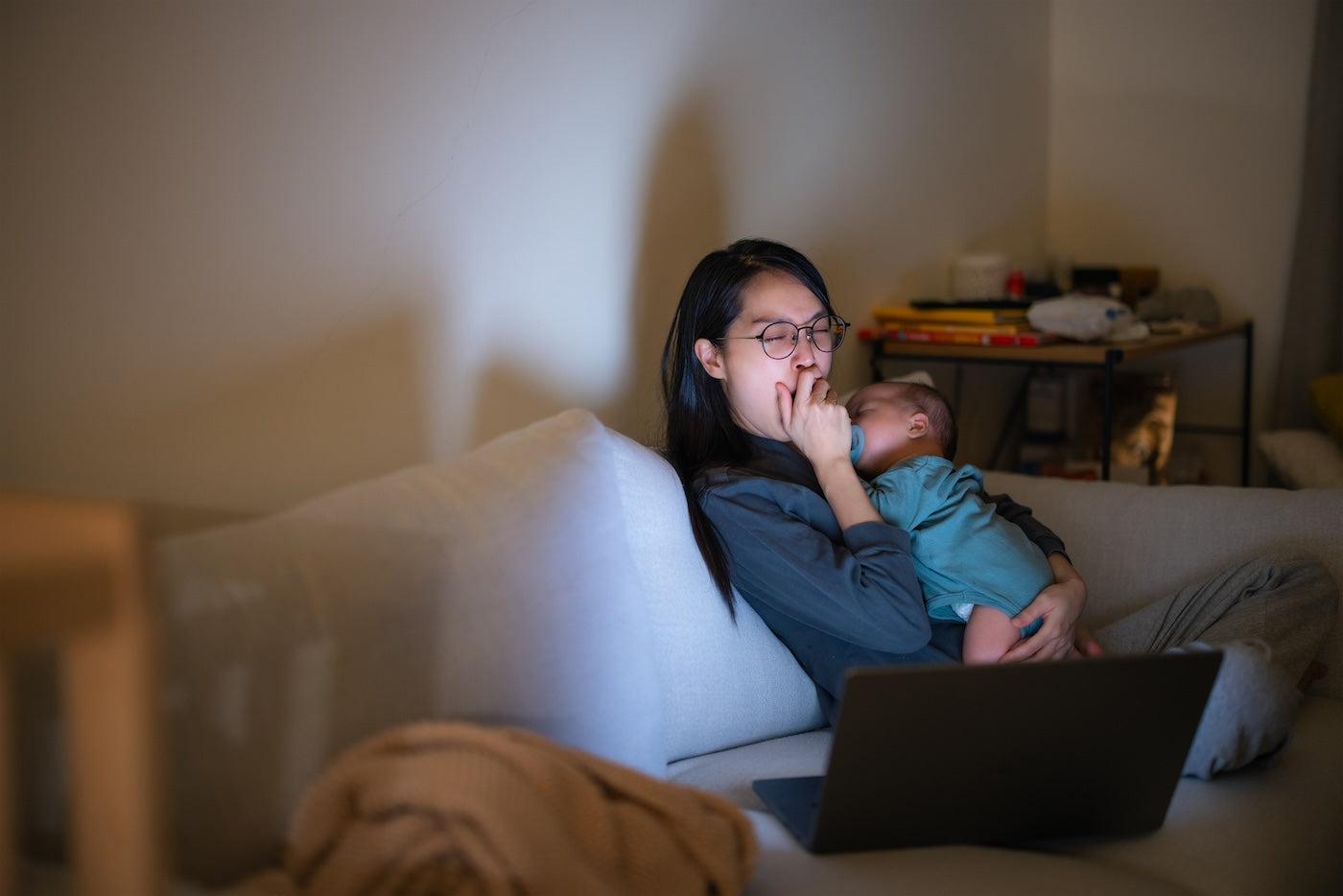
If you’re a new parent running on empty—even if your sleep tracker insists you’ve had a decent night’s kip—you’re not imagining it. A new study presented at the SLEEP 2025 annual meeting reveals that while new mums may eventually return to their pre-baby sleep totals, *how* they sleep remains profoundly different… and frequently disrupted.
Sleep: It’s Not Just About Hours!
Researchers from Washington State University’s Sleep and Performance Research Centre tracked the sleep patterns of 41 first-time mums (aged 26 to 43), collecting data from their Fitbits beginning a year before birth and continuing through their baby’s first birthday.
During the first week post-birth, these mums averaged just 4.4 hours of sleep per night—a sharp dip from their pre-baby average of 7.8 hours. Even more striking, their longest stretch of uninterrupted sleep shrank from 5.6 hours to a mere 2.2. By the time their babies were 2 to 3 months old, mums were still only getting around 4.1 hours of continuous shut-eye—well under what they were used to before becoming parents.
Dr Teresa Lillis, the lead author of the study and an adjunct professor at Rush University Medical Centre, explains: “Mums do tend to regain their total nightly sleep after those early weeks, but the structure of their sleep stays changed.” In other words, it’s not just about how *much* you sleep—but whether you manage to stay asleep. And that has a big impact on how rested (or not) you feel.
Why This Matters for Maternal Health
Broken sleep isn’t just annoying—it can affect both your mental and physical wellbeing. Dr Lillis notes that this type of fragmented sleep may contribute to postnatal depression and other health challenges.
So while advice like “nap when the baby naps” isn’t exactly wrong, this research suggests we need to go further: New mums need support to get longer, more restful blocks of sleep—not just a few extra minutes here and there.
The bottom line? If you’re a mum feeling utterly shattered despite technically getting “enough” sleep, there’s a reason. Your rest is likely still fragmented and far less restorative than it once was—and that really does matter. We need to shift the conversation from just *how much* sleep new mums get, to *how well* they sleep.
A Smarter Way to Stretch Sleep
At Happiest Baby, we understand that exhaustion isn’t just a passing inconvenience—it can affect every part of your life. That’s why we created SNOO. Our award-winning smart bassinet automatically responds to your baby’s cries with gentle rocking and white noise, helping them drift off and stay asleep…so you can enjoy more uninterrupted rest, too. In fact, SNOO adds 1–2+ hours of sleep per night, helping tired parents get the deep, consistent sleep they need to feel like themselves again.
More on Sleep and Maternal Health:
Haftungsausschluss: Die Informationen auf unserer Website sind KEINE medizinischen Ratschläge für eine bestimmte Person oder einen bestimmten Zustand. Sie sind lediglich als allgemeine Informationen gedacht. Wenn Sie medizinische Fragen und Bedenken bezüglich Ihres Kindes oder Ihrer eigenen Gesundheit haben, wenden Sie sich bitte an Ihren Gesundheitsdienstleister. Muttermilch ist die beste Quelle der Ernährung für Babys. Es ist wichtig, dass Mütter in Vorbereitung auf das Stillen und währenddessen eine gesunde, ausgewogene Ernährung zu sich nehmen. Die Kombination von Stillen und Flaschenernährung in den ersten Lebenswochen kann die Muttermilchversorgung verringern und die Entscheidung, nicht zu stillen, ist schwer rückgängig zu machen. Wenn Sie sich entscheiden, Säuglingsnahrung zu verwenden, sollten Sie die Anweisungen sorgfältig befolgen.
Top-Nachrichten






DIESEN ARTIKEL TEILEN
ELTERN WAHL
Bestseller