PARENTS
The Truth About “Dry Drowning”
Let’s debunk this misunderstood phenomenon.

Geschrieben von
Happiest Baby Staff
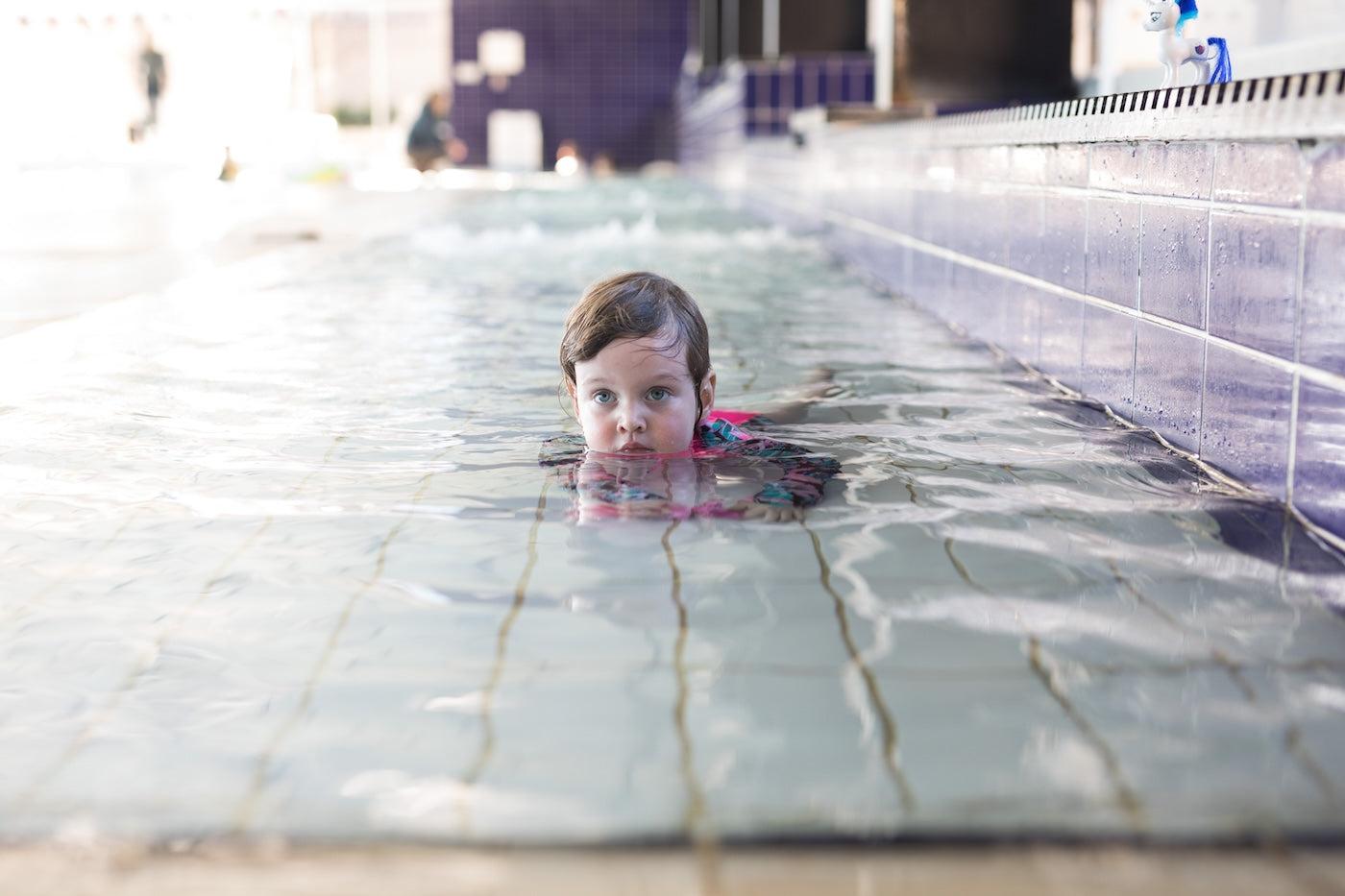
If your child has ever had a scary moment in the water—like gulping down water the wrong way—you may have turned to Google afterwards, only to be met with alarming headlines about something called dry drowning. Stories of little ones who seemed totally fine one minute, only to gasp for breath or collapse hours later, can be enough to make any parent panic.
But here’s the truth: “Dry drowning” isn’t a real medical diagnosis. In fact, many experts agree it’s time to ditch the term altogether. Here’s what parents really need to know about this widely misunderstood phenomenon—plus how to keep your child safe in and around water.
What is “dry drowning”?
The term “dry drowning” is often used in media reports to describe a situation where a child breathes in a small amount of water during a near-drowning incident, then develops serious symptoms hours later—like difficulty breathing or, in extremely rare cases, death. But health experts say this label isn’t accurate or helpful.
What’s wrong with saying “dry drowning”?
For starters, “dry drowning” isn’t recognised by leading medical authorities such as the World Health Organization (WHO), the US Centers for Disease Control and Prevention (CDC), or the American Red Cross. Paediatricians note that the term creates unnecessary confusion and anxiety for families.
Instead of trying to break drowning into types like “dry,” “wet,” or “secondary,” experts agree that drowning should be viewed as a process—not a single event. That process starts when someone experiences breathing trouble after being submerged in water. It might resolve quickly, require medical treatment, or become fatal. But all of it falls under the same umbrella.
How is “dry drowning” different from regular drowning?
Short answer: it’s not. While “dry drowning” sounds like it might be something distinct, it’s really just part of the broader drowning spectrum.
In very rare cases, someone might struggle to breathe after inhaling even a small amount of water—but this still counts as drowning. Symptoms may show up straight away or develop over several hours, which is why some people call it “delayed drowning.” Again, neither term is medically recognised, and using them can be misleading.
How is drowning classified?
Since “dry drowning” and “secondary drowning” aren’t medically accepted terms, it helps to understand how drowning is actually classified by healthcare professionals.
In clinical settings, drowning is defined as “the process of experiencing respiratory impairment from submersion or immersion in liquid.” That means any time liquid gets into the airway and interferes with breathing, it’s considered drowning—whether it’s a big gulp or just a splash.
Medical professionals categorise drowning based on the outcome:
- Fatal drowning: The person does not survive.
- Nonfatal drowning with injury or illness: The person survives but may suffer complications such as inflammation, fluid in the lungs, or low oxygen levels.
- Nonfatal drowning without injury or illness: The individual has a brief incident and recovers fully without medical issues.
No matter how the event plays out, it’s part of the same process. The important thing is how the body responds—and how quickly help is provided when needed.
How common is “dry drowning”?
Drowning is one of the leading causes of unintentional injury death among children aged 1 to 4—but cases of delayed or so-called “dry” drowning are incredibly rare. While it's crucial to stay alert around water, the idea of a child being completely fine and then suddenly facing life-threatening symptoms hours later is highly unlikely.
What are the signs and symptoms of “dry drowning”?
The thought of a child becoming seriously unwell hours after swimming is a parent’s nightmare. Thankfully, delayed symptoms after a near-drowning event are extremely rare.
When they do occur, these are the signs to watch for:
- Persistent coughing
- Laboured or rapid breathing
- Chest discomfort
- Fatigue or appearing unusually drowsy
- Vomiting
If your child shows any of these symptoms after swimming—especially if they had a moment of distress in the water—it’s best to contact your GP or head to a hospital straight away.
When should parents seek medical attention?
Most children who swallow water or have a little scare while swimming bounce back without issue. But call your GP or take your child to A&E if they:
- Have difficulty breathing
- Cough continuously
- Seem very sleepy, weak, or disoriented
- Have blue lips or skin
- Are vomiting again and again
These could be signs of serious breathing trouble and should be checked urgently.
How can parents prevent drowning?
Since all types of drowning—including those referred to as “dry drowning”—involve water getting into the airway, prevention is key. Here are a few expert-backed ways to help protect your little one:
- Always supervise: Never take your eyes off children around water—not even for a second.
- Use proper flotation devices: Life jackets are essential in natural bodies of water like rivers, lakes, and the sea.
- Start swim lessons early: Swimming lessons can begin as early as 1 year old, according to the American Academy of Pediatrics (AAP). While they won't be perfecting freestyle just yet, they will gain confidence in the water.
- Stay off your phone: Distractions can lead to tragedy. Always keep your focus on your child.
- Fence your pool: A four-sided barrier with a self-latching gate can reduce the risk of drowning by up to 83%.
How is “dry drowning” treated?
If your child shows signs of breathing difficulty after being in water, they need to be assessed by a healthcare provider right away. Treatment might include:
- Oxygen support
- Observation in a hospital
- Other respiratory care as needed
The good news? When symptoms are caught early and treated promptly, most children make a full recovery.
The Bottom Line on “Dry Drowning”
“Dry drowning” may grab headlines, but it’s not a helpful or scientifically valid term. The real message for parents? While drowning is a real risk for children, it’s one that can be largely prevented. With a few simple precautions—and a watchful eye—you can help your child enjoy safe, splashy fun in the sun.
More Warm-Weather Safety Tips:
***
REFERENCES
- World Health Organization: Drowning
- Centers for Disease Control and Prevention: Drowning Facts
- American Red Cross: Dry or Delayed (Secondary) Drowning
- American Academy of Pediatrics: Prevention of Drowning, Pediatrics, May 2019
- Cleveland Clinic: Dry Drowning: Separating Fact From Fiction
- UpToDate: Drowning (Submersion Injuries)
- Medical News Today: What Is Dry Drowning?
- Centers for Disease Control and Prevention: Drowning
- Baylor College of Medicine: Debunking Dry Drowning
Haftungsausschluss: Die Informationen auf unserer Website sind KEINE medizinischen Ratschläge für eine bestimmte Person oder einen bestimmten Zustand. Sie sind lediglich als allgemeine Informationen gedacht. Wenn Sie medizinische Fragen und Bedenken bezüglich Ihres Kindes oder Ihrer eigenen Gesundheit haben, wenden Sie sich bitte an Ihren Gesundheitsdienstleister. Muttermilch ist die beste Quelle der Ernährung für Babys. Es ist wichtig, dass Mütter in Vorbereitung auf das Stillen und währenddessen eine gesunde, ausgewogene Ernährung zu sich nehmen. Die Kombination von Stillen und Flaschenernährung in den ersten Lebenswochen kann die Muttermilchversorgung verringern und die Entscheidung, nicht zu stillen, ist schwer rückgängig zu machen. Wenn Sie sich entscheiden, Säuglingsnahrung zu verwenden, sollten Sie die Anweisungen sorgfältig befolgen.
Top-Nachrichten






DIESEN ARTIKEL TEILEN
ELTERN WAHL
Bestseller