PARENTS
The Buzz About Caffeine and Breastfeeding
Do you have to “pump and dump” after your morning cuppa? Here, everything you need to know.

Geschrieben von
Happiest Baby Staff
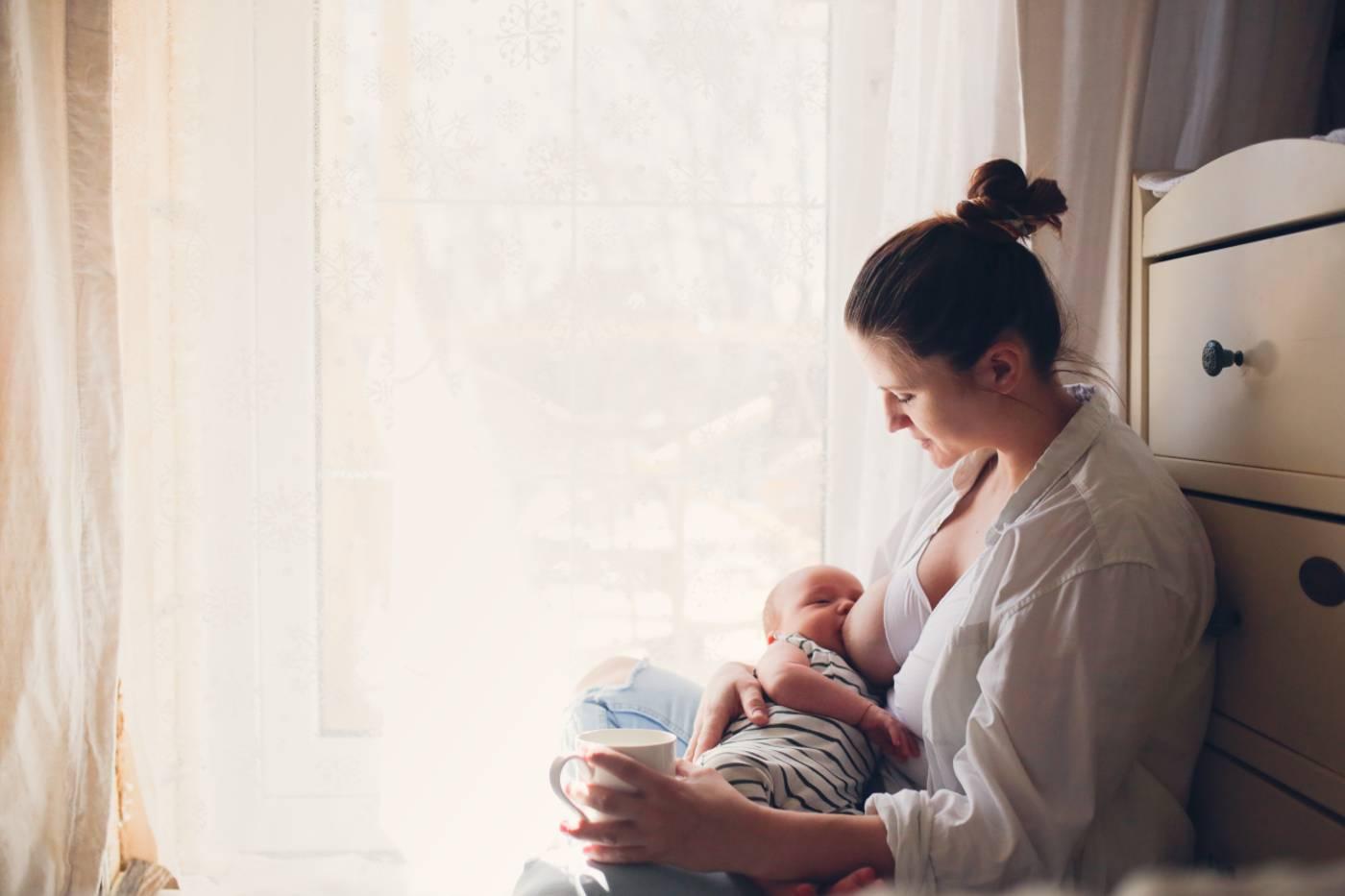
Your baby has arrived! Enjoy the sushi, the luncheon meat sandwiches, and glorious piles of unpasteurized cheese! None of these eats are considered harmful to a nursing infant. (Score!) But it is often less clear how much caffeine—if any—can be safely consumed while breastfeeding. In fact, nearly 59% of breastfeeding and pregnant mums were unable to correctly identify what a safe amount of caffeine actually is, according to a 2023 report. That is likely why breastfeeding mothers are more likely to self-restrict caffeine over all other foods.
If you have been longingly eyeing your Nespresso and wondering Can I drink coffee when breastfeeding?, keep reading for all the info you need about safely drinking coffee, tea, and other caffeinated beverages while breastfeeding.
Is it safe to have caffeine while breastfeeding?
Although caffeine does transfer to breastmilk, the amount that gets to your baby through nursing is generally less than 1% of the amount you have consumed. So, gulping down a modest amount of caffeine is likely A-okay for breastfeeding parents—in terms of its effect on your little one and on your breastmilk supply. That said, if your baby is extra sensitive to caffeine—and wide-eyed and jittery as a result—that can lead to poor feedings, which can then possibly lead to lowered milk supply.
How much caffeine is okay while breastfeeding?
Good news! Experts agree that consuming low to moderate amounts of caffeine most likely will not impact your baby one bit. While the NHS errs on the side of caution, advising nursing parents to limit their caffeine to 200 milligrams a day, the Centers for Disease Control and Prevention (CDC) in America is comfortable bumping that recommendation to up to 300 milligrams, or roughly three cups of coffee a day. After all, even if you down three cups of coffee a day, caffeine will still be undetectable in your infant’s urine. However, since newborns and preterm babies are more sensitive to caffeine than older babies, it is a good idea to drink less in the first few days after your baby is born.
And remember: Caffeinated coffee is not your only source of caffeine! Decaffeinated coffee still contains about 2 milligrams of caffeine. Other caffeine-filled items include, cola, tea, energy drinks, and even some pain relievers. And while it is true that chocolate does contain caffeine, a typical serving does not significantly increase the level of caffeine in breastfed infants. (Bring on the Cadburys!)
How long should you wait to nurse after drinking coffee?
There are no hard and fast rules when it comes to knowing when it is safe to breastfeed after drinking coffee. But we do know that you do not need to “pump and dump” after drinking coffee! Research suggests that caffeine levels in your blood peaks around one hour after consumption—and it takes between one and two hours to do the same in breastmilk. Even when your cuppa does reach your baby, it contains only about 1.5% of the caffeine it originally did. Of course, that less-than-2% can affect babies differently. Take the American Academy of Pediatrics’ advice and keep a close eye on your baby to see how—or if—they react to your low to moderate caffeine consumption. If you feel your baby becomes more fussy or irritable when you drink an excessive amount of caffeine (more than five caffeinated beverages a day), consider decreasing your intake.
What does caffeine do to a breastfed baby?
In moderation, your morning coffee or afternoon cola does not impact your baby at all. That said, research has shown that drinking 10 or more cups of coffee daily can cause your breastfed infant to experience fussiness, jitteriness, and poor sleep. Drinking about half that amount (450 milligrams of caffeine) has been shown to possibly decrease iron concentrations in breastmilk, resulting in mild iron deficiency anemia in some breastfed babies.
How do you know if your baby is sensitive to caffeine?
Some telltales that your baby is sensitive to caffeine include fussiness, appearing wide-eyed, and not being able to stay asleep for long. If you suspect that caffeine is behind these behaviours, wait two hours post-coffee to nurse or cut back (or stop) your caffeine consumption for about two to three weeks to see if you notice any changes in your little one’s behaviour. (It will likely take at least a few days to see any possible changes.)
What should I drink while breastfeeding?
Water is the best beverage for breastfeeding parents. Aim to drink at least 8 cups of water a day to not only quench your thirst (many parents feel thirsty while breastfeeding), but to also help maintain your breastmilk supply. After all, up to 88% of your breastmilk is water! To help get enough, drink a glass of water when your thirsty and every time you breastfeed. Up your intake if your urine is dark yellow or infrequent or your mouth is dry.
Haftungsausschluss: Die Informationen auf unserer Website sind KEINE medizinischen Ratschläge für eine bestimmte Person oder einen bestimmten Zustand. Sie sind lediglich als allgemeine Informationen gedacht. Wenn Sie medizinische Fragen und Bedenken bezüglich Ihres Kindes oder Ihrer eigenen Gesundheit haben, wenden Sie sich bitte an Ihren Gesundheitsdienstleister. Muttermilch ist die beste Quelle der Ernährung für Babys. Es ist wichtig, dass Mütter in Vorbereitung auf das Stillen und währenddessen eine gesunde, ausgewogene Ernährung zu sich nehmen. Die Kombination von Stillen und Flaschenernährung in den ersten Lebenswochen kann die Muttermilchversorgung verringern und die Entscheidung, nicht zu stillen, ist schwer rückgängig zu machen. Wenn Sie sich entscheiden, Säuglingsnahrung zu verwenden, sollten Sie die Anweisungen sorgfältig befolgen.
Top-Nachrichten






DIESEN ARTIKEL TEILEN
ELTERN WAHL
Bestseller