BABY
When Do Babies Eat Solid Food?
When it comes to babies, there is no shortage of opinions on when, how, and what kinds of foods to feed them.

Geschrieben von
Dr. Harvey Karp
When it comes to babies, there is no shortage of opinions on when, how, and what kinds of foods to feed them. For example, in the 1960s, Dr. Walter Sackett famously told parents that babies should be eating eggs and bacon as young as 10 days old! In the 1980s, paediatricians told parents to avoid eggs until 1 year of age…for fear of triggering allergies. Then, we discovered that earlier exposure actually led to fewer allergies, not more! Now we are back to recommending starting eggs at around 6 months.
So, if you are confused about starting solids, you are not alone. But here are a few common-sense ideas about introducing solids that will hopefully be a useful guide…
How long should I feed my baby breastmilk or formula?
Even when you start solids, breastfeeding offers great benefits for you and your baby. (The longer you breastfeed, the more you lower your risk of breast cancer!) Ideally, you might try to exclusively breastfeed for the first 6 months and continue it as part of your child’s diet until about the 2nd birthday. Of course, this is not possible for all families.
At what age should you introduce solid foods to your baby?
Babies typically begin eating solids around 6 months.
After months of just giving milk (breast or formula) it makes sense to think that a baby’s body needs some solid food to give a more balanced nutrition. But, even at 6 months, milk is 95% of an infant’s nutrition, by 9 months it is about 75% and it only reaches 50% at the first birthday.
In truth, most early foods are what super models eat to keep from gaining weight! Milk has protein, fats, perfectly designed carbohydrates and so much more…and rice cereal is, well, just a clump of starch. Now, this does not mean that babies’ nutritional needs are completely met by the special milk we provide. Babies—and adults—benefit from some extra vitamin D, and by 6 months babies (especially breastfed babies) are usually running low on iron (so important for your baby’s brain, blood, immunity, etc).
Breastmilk does not contain much iron, but it is very well absorbed…until you start solids. Most food interferes with the absorption of iron from breastmilk, but vitamin C enhances iron absorption. So, it is important to add foods that have extra vitamin C to iron-rich foods (more about this below).
What solid foods should you introduce to your baby first?
From there, your mini gourmand can expand their palate to most food groups, including veggies, fruits, meat, dairy products (such as yogurt and cheese), eggs, fish, and more.
Tips for introducing first foods:
For decades, parents have been told to offer infant cereal fortified with iron. The amount of iron in these products is small and cereals are mostly just starch. Plus, brown rice has been shown to have increased levels of arsenic, a carcinogenic chemical. So, better to stick with barley, millet, farro, or amaranth.
It is a good idea to introduce just one food every two to three days. That will help you figure out the cause of any reactions (diarrhea, constipation, rash).
Reduce the risk of choking by only giving small pieces of food, avoiding hard bits, and only allowing eating while sitting. And now is a good time to refresh your memory about how to rescue a child that is choking.
When you can, offer organic food. Why give your baby foods that were sprayed with chemicals strong enough to kill bugs? For lots more info about the safest food – with the least amount of pesticide – check out the Environmental Working Group’s 'dirty dozen and clean 15'.
Note: When a fully breastfed baby starts food, be prepared for their poop smell to switch from sort of sweet…to something more like a sewer!
Baby solid food guide and timeline:
0 to 6 months
- Breastmilk or formula
6 to 8 months (if the baby is showing signs of readiness):
- Pureed fruit, vegetables (banana, pear, scraped apple, avocado, steamed yellow squash, carrots, are some favourites)
- Iron-containing food—mashed lentils, a spoon of adult organic prune juice, finely pureed meat. Cooking food in a cast iron skillet boosts the iron level in food. Consider mixing into the iron-rich food a bit of fresh banana, a drop of lemon juice, or infant vitamin C drops to boost iron absorption.
- Other allergy-triggering foods at this time can reduce the risk of allergic reactions. Those foods include: dairy (a bit of yogurt), eggs, soy, strawberries, citrus, and fish. Allergy-triggering foods can be introduced around 6 months, and the NHS recommends introducing them before your baby reaches 12 months.
9 to 12 months
- Small, soft finger foods that are chopped, mashed, or ground. Finger foods can include bananas, ripe pear, steamed apple, sweet potato, avocado, egg, yogurt, and soft or mashed vegetables.
- When you give meat, make sure it is minced finely…meat is a common cause of choking.
- Usually, cow’s milk is introduced around 12 months. It is best to use full fat, organic, grass-fed milk.
Which foods should you avoid giving to your baby in the first year?
As exciting as it might be to introduce your little foodie to all of your faves, there are some foods that are not safe for Baby’s plate…no matter how ready your kiddo seems. Those foods include:
- Honey—it can carry a nasty form of food poisoning called botulism that can cause temporary paralysis…even death. (Maple syrup is fine.)
- Easy-to-choke-on foods, such as hard candy, ice cubes, hotdogs, whole grapes, dried fruits (such as raisins or dried cranberries), hard vegetables (such as raw carrot sticks or stringy celery stalks), popcorn, corn chips, seeds, and nuts. Nuts are a particularly serious cause of choking. It is wise to avoid them until 3 to 4 years of age.
What are some signs your baby is ready for solid foods?
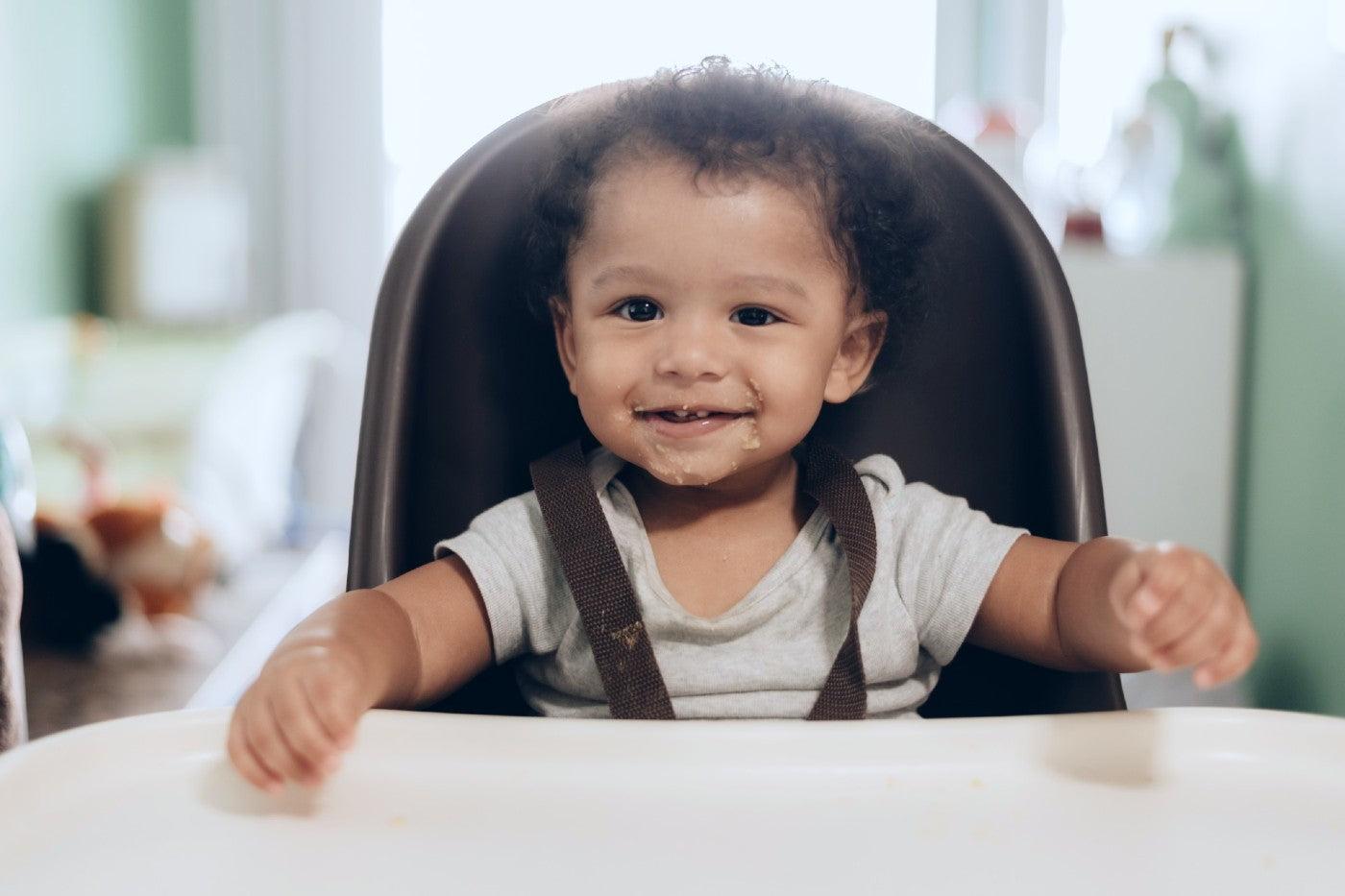
Before you start filling your baby’s high-chair tray with solids, it important that your baby shows you that they are up for the challenge. While they may not have too many questions for the chef about what’s on the menu, they will be able to do a few key things that demonstrate their bodies are able to handle solids.
Signs of readiness include:
- The ability to sit upright and hold their head up without assistance
- They no longer automatically 'tongue thrust'—meaning they do not push food out of their mouth when you try to feed them.
- Your baby gives your signs of hunger, and milk alone no longer appears to be enough to keep them full.
- Your baby starts smacking their lips and reaching out to grab your fork when they see you eating.
Haftungsausschluss: Die Informationen auf unserer Website sind KEINE medizinischen Ratschläge für eine bestimmte Person oder einen bestimmten Zustand. Sie sind lediglich als allgemeine Informationen gedacht. Wenn Sie medizinische Fragen und Bedenken bezüglich Ihres Kindes oder Ihrer eigenen Gesundheit haben, wenden Sie sich bitte an Ihren Gesundheitsdienstleister. Muttermilch ist die beste Quelle der Ernährung für Babys. Es ist wichtig, dass Mütter in Vorbereitung auf das Stillen und währenddessen eine gesunde, ausgewogene Ernährung zu sich nehmen. Die Kombination von Stillen und Flaschenernährung in den ersten Lebenswochen kann die Muttermilchversorgung verringern und die Entscheidung, nicht zu stillen, ist schwer rückgängig zu machen. Wenn Sie sich entscheiden, Säuglingsnahrung zu verwenden, sollten Sie die Anweisungen sorgfältig befolgen.
Top-Nachrichten






DIESEN ARTIKEL TEILEN
ELTERN WAHL
Bestseller