BABY
Safe Sleep for Babies: What Parents Need to Know
You will rest easier if you know your baby is sleeping safely. Here, everything you need to know about keeping your little one safe.

Geschrieben von
Happiest Baby Staff
All new parents worry about sleep: hoping and wondering and crossing their fingers and toes that their new bundle of joy will turn out to be a coveted “good” sleeper. And getting enough ZZZs in infancy is, indeed, important. But what’s most important is that your baby is sleeping safely. It’s heartbreaking to think about, but the truth is, every year around 200 babies still die suddenly and unexpectedly while sleeping in Australia...and many of those deaths are preventable. So, for parents to truly rest easy, it’s essential to know your safe sleep basics.
Baby Safe Sleep Must #1: Place Your Baby on Their Back
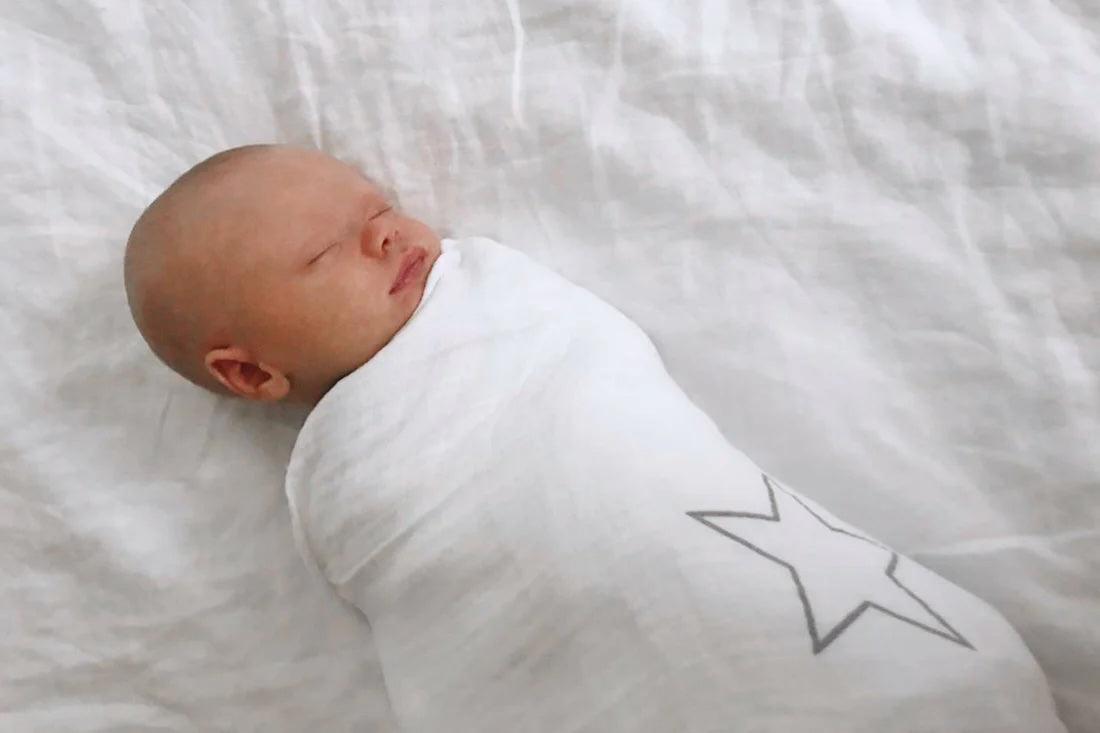
Until your precious bub reaches their first birthday, they should always be placed on their back for all naps and nights. Babies who sleep this way are far less likely to die of sudden unexpected infant death (SUDI) than babies who snooze on their tummies or sides. For help ensuring babies remain safely on their backs during sleep, our SNOO Smart Sleeper features a secure swaddling system, which prevents little ones from rolling to unsafe positions during sleep.
Baby Safe Sleep Must #2: Use a Firm and Flat Sleep Surface
According to Lullaby Trust, your baby’s sleep space—whether a cot, bassinet, or play yard—must include a tight-fitting and firm mattress that doesn’t indent when you place your baby down. When babies sleep on a soft sleep surface, like an adult bed, couch, or armchair, their risk of sleep-related death goes way up. The same holds true for babies who snooze on an ill-fitting mattress, which can open the possibility of accidentally becoming wedged between the mattress and the cot. Another safe-sleep necessity: a completely flat sleep surface, which means not at an incline. Babies who sleep on a dangerous incline are at risk for asphyxiation and falling if not secured properly.
Baby Safe Sleep Must #3: Keep Everything Out of the Bassinet
Stuffed animals, wedges, positioners, pillows, top sheets, blankets, and cot bumpers—none of these items belong in your baby’s bassinet or cot. For young babies, a safe sleep space is an empty sleep space, since soft objects can increase your tot’s risk of entrapment, suffocation, or strangulation. In the end, it’s recommended that you wait until your baby is at least 12 months old before introducing a lovey, like handkerchief-sized silky blanket or hand-sized cuddly stuffed animal, a pillow, or a blanket to a kiddo’s sleep space.
Baby Safe Sleep Must #4: Share a Room, Not a Bed
Public health authorities recommend keeping your sweet baby close by sharing a room with them for at least the first six months of their life, noting that this simple act can decrease a baby’s chances of SUDI by as much as 50%. But don’t confuse room sharing with bed sharing, a practice that’s associated with 70% of infant sleep deaths. It’s best to only bring your baby into your bed to offer a feed or some comfort—not for sleep. Bed-sharing is not recommended for any babies because of the risk of entrapment, suffocation, and SUDI...but it’s especially dangerous for babies younger than 4 months old and those who arrived prematurely or at a low birth weight.
Baby Safe Sleep Must #5: The Right Temperature
While parents often worry that their snoozing baby is too chilly, know that overheating increases a baby’s risk of SUDI. To keep your baby at a safe temperature while sleeping, adjust the thermostat in their room to fall between 68 and 72 degrees Fahrenheit. (That’s 20 to 22.2 degrees Celsius.) Dress your nugget in no more than one additional layer of clothes than you’d be comfortable in. And whatever you do, keep loose blankets, and quilts out of their sleep space! (A large percentage of infants who die of SUDI are found with their head covered by bedding.) Instead, nestle your baby in a wearable blanket or safe swaddle, like our award-winning Sleepea, which is made from breathable organic cotton and mesh to further keep babies cool and comfy.
Final Thoughts: Safe Sleep for Babies
Safe sleep goes beyond your baby’s personal sleep space—and the temperature of their room. Here are a few more habits to keep in mind to continue keeping your little one sleeping safely.
- Relocate your baby. If your little one falls asleep on a nursing pillow, a plush lounging pad, in the car seat, pram, swing, baby carrier, or in your bed, move them to a firm, safe sleep surface—on their back—as soon as you can
- Clear your sleep space. Parents are human...and tired! So, if there’s any chance that you might doze off while feeding your lovebug in bed, remove all pillows, sheets, blankets, or any soft items that might accidentally cover your baby’s face, head, and neck—or cause your nugget to overheat. And as soon as you wake, move your baby to their own safe sleep space.
- Consider a dummy. Offering a dummy at nap and bedtime helps reduce the risk of SUDI... even if it falls out after your baby sails off to dreamland. If you’re nursing, it’s best to wait until breastfeeding is well established before offering a dummy. And if your bub doesn’t love the binkie, feel free to keep trying, but don’t force it! Some babies simply don’t like them.
- Breastfeed if you can. Breastfed babies have a lower risk of SUDI. And while the protective effect increases with exclusivity, any amount of nursing has been shown to be more protective than zero breastfeeding.
- Kick the butts. Keep your tot away from smokers and places where people will be smoking. Research shows exposure to smoke is a major risk factor for SUDI, as is smoking while pregnant.
***
REFERENCES
- The Lullaby Trust: Safer sleep reduces the risk of SIDS
- NHS: Sudden infant death syndrome (SIDS)
- HealthyChildren.org: A Parent's Guide to Safe Sleep
- Safe to Sleep® Campaign: History. Eunice Kennedy Shriver National Institute of Child Health and Human Development (NICHD).
- Centers for Disease Control and Prevention (CDC): Babies Sleep Safely.
- The White House: Bills Signed—H.R. 3182 and H.R. 6023, May 16, 2022.
- Sleep Environment Risks for Younger and Older Infants. Pediatrics. 2014; 134(2): e406-e414.
- SIDS and Other Sleep-Related Infant Deaths: Updated Recommendations. Pediatrics. 2016; 138(5): e20162938.
- Sudden Unexpected Death in Infancy (SUDI) National Coordination Service: Breastfeeding and Reduced SIDS Risk.
Haftungsausschluss: Die Informationen auf unserer Website sind KEINE medizinischen Ratschläge für eine bestimmte Person oder einen bestimmten Zustand. Sie sind lediglich als allgemeine Informationen gedacht. Wenn Sie medizinische Fragen und Bedenken bezüglich Ihres Kindes oder Ihrer eigenen Gesundheit haben, wenden Sie sich bitte an Ihren Gesundheitsdienstleister. Muttermilch ist die beste Quelle der Ernährung für Babys. Es ist wichtig, dass Mütter in Vorbereitung auf das Stillen und währenddessen eine gesunde, ausgewogene Ernährung zu sich nehmen. Die Kombination von Stillen und Flaschenernährung in den ersten Lebenswochen kann die Muttermilchversorgung verringern und die Entscheidung, nicht zu stillen, ist schwer rückgängig zu machen. Wenn Sie sich entscheiden, Säuglingsnahrung zu verwenden, sollten Sie die Anweisungen sorgfältig befolgen.
Top-Nachrichten






DIESEN ARTIKEL TEILEN
ELTERN WAHL
Bestseller