BABY
Get Rid of Cradle Cap With This Proven Method
Uh-oh. Is your newborn’s adorable, kissable head looking a little…scaly? Try this cradle cap treatment.

Geschrieben von
Dr. Harvey Karp
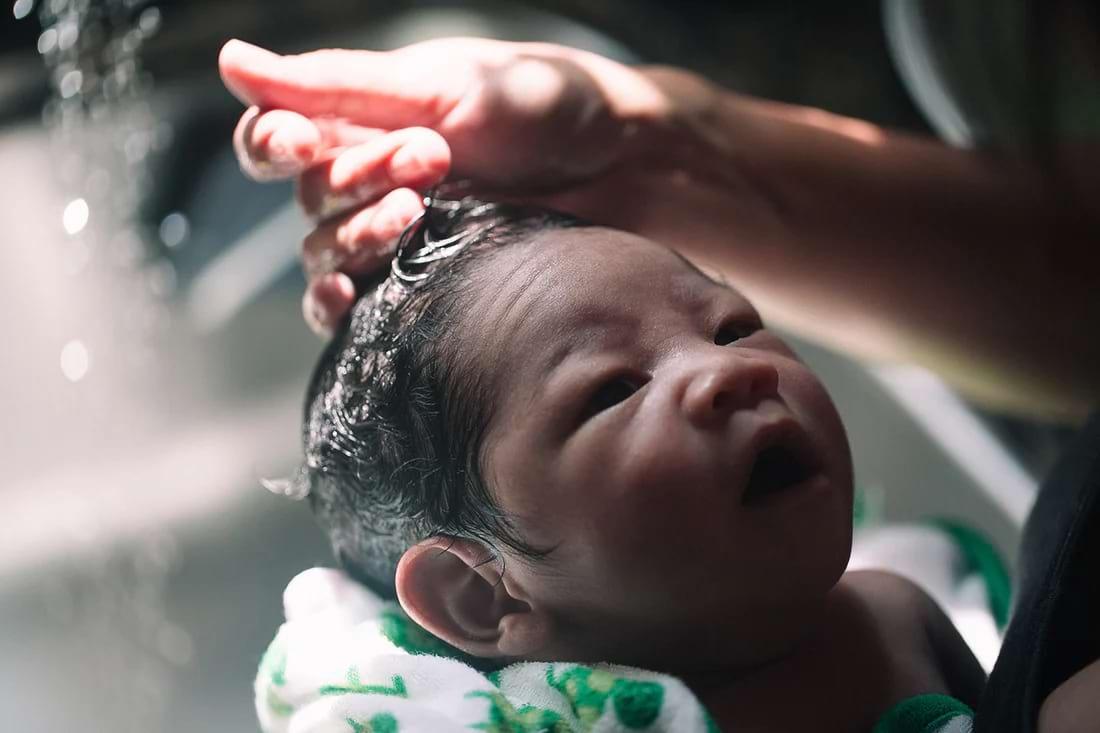
Uh-oh. Is your newborn’s adorable, kissable head looking a little…scaly?
What is cradle cap?
As early as a few weeks old, many babies start showing greasy, thick, crusty, or flaky scales on their scalp, forehead, eyebrows, or even their ears. The scales can be yellow, white, or brown, and the skin might be a little red. This is cradle cap—or seborrheic dermatitis—and yes, it can be pretty icky. But there is good news:
- Cradle cap is harmless. It is not a sign of infection, allergy, or eczema. And it is not painful. (But it can definitely be itchy, causing some infants to rub or scratch their forehead with their hands…or to rub their face into a sheet.)
- Cradle cap is not contagious. Babies cannot pass cradle cap to one another.
- Cradle cap is no biggie. Babies tend to get it on the eyebrows or soft spot. Why? Because parents are a little hesitant to scrub these sensitive areas.
- Cradle cap will not last forever. It will go away within 1-2 weeks after you address it.
What causes cradle cap?
Many parents think that cradle cap is just dry skin. Cradle cap looks like dry skin, but it is actually flakes of dead skin stuck together with the natural oil from your baby’s pores. Those yucky scales are just dead skin trapped in extra oil that is stuck to the scalp like a bunch of postage stamps stuck on a package. In the removal process, you are trying to float those postage stickers up—so that you can wash them off.
How to Get Rid of Cradle Cap
- Massage oil into your baby’s scalp. I recommend using coconut oil, or cocoa butter. They are natural and easy to find at stores.
- Let it sit for a few minutes. The oil will soften and dissolve the cradle cap so that the dead skin can “float up” off the scalp.
- Apply a mild, baby shampoo. You have got to get rid of the excess oil…and shampoo will do the trick.
- Gently scrub. With the shampoo still in, you’ll want to use a gentle baby brush or a soft-bristled toothbrush to free the dead skin. Try not to pick or scratch.
- Rinse thoroughly with water. And say goodbye to cradle cap as the gunk and suds go down the drain!
- Use dandruff shampoo as a last resort. If our treatment does not take care of it, ask your doctor if you should try an anti-dandruff shampoo or cortisone lotion. But do not turn to these first—they can irritate your baby’s sensitive skin.
Cradle cap…on your baby’s bum?
In some cases, cradle cap might even extend to your baby’s bottom. You might mistake it for diaper rash, and it is best to treat it the same way: Keep the skin clean and dry, use plain water or mild wipes, and apply a gentle diaper cream or lotion. But since so many things can cause a diaper rash, it is best to ask your doctor.
Do not make this cradle cap mistake!
Many parents think they should apply oil to their baby’s scalp as a preventative remedy—they get fooled by its dry appearance and think oil will help. But since excess oil is the cause, that is one of the worst things to do. So, once you get rid of cradle cap, think of it like starting from a clean slate—that you will want to keep clean. Wash your infant’s hair and face regularly to keep excess oil from building up.
And buck up your courage to gently, yet thoroughly, clean around the eyebrows and sensitive soft spot!
Haftungsausschluss: Die Informationen auf unserer Website sind KEINE medizinischen Ratschläge für eine bestimmte Person oder einen bestimmten Zustand. Sie sind lediglich als allgemeine Informationen gedacht. Wenn Sie medizinische Fragen und Bedenken bezüglich Ihres Kindes oder Ihrer eigenen Gesundheit haben, wenden Sie sich bitte an Ihren Gesundheitsdienstleister. Muttermilch ist die beste Quelle der Ernährung für Babys. Es ist wichtig, dass Mütter in Vorbereitung auf das Stillen und währenddessen eine gesunde, ausgewogene Ernährung zu sich nehmen. Die Kombination von Stillen und Flaschenernährung in den ersten Lebenswochen kann die Muttermilchversorgung verringern und die Entscheidung, nicht zu stillen, ist schwer rückgängig zu machen. Wenn Sie sich entscheiden, Säuglingsnahrung zu verwenden, sollten Sie die Anweisungen sorgfältig befolgen.
Top-Nachrichten






DIESEN ARTIKEL TEILEN
ELTERN WAHL
Bestseller