BABY
How to Keep Kids Safe and Warm in Freezing Weather
Baby, it's cold outside! Here is how to cope.

Geschrieben von
Dr. Harvey Karp
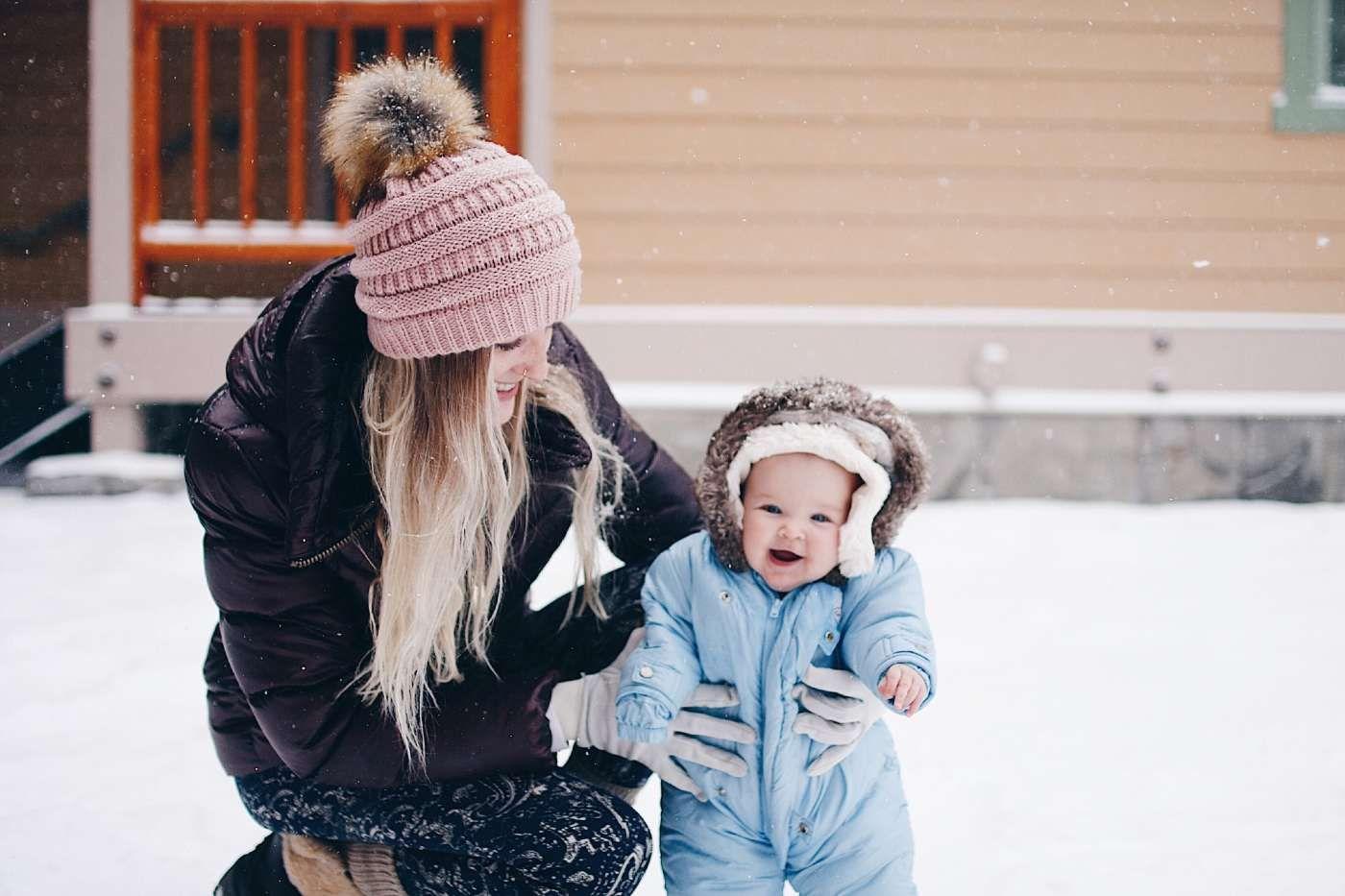
When dropping temperatures are enough to chill to the bone even the heartiest among us, parents may wonder: How cold is too cold for a baby? Or a toddler for that matter!
Everyone’s tolerance for the cold is a bit different (there is always that one guy who shovels his driveway…in shorts!). But for little kids there comes a point where the cold isn’t just uncomfortable, it is downright dangerous. So, even as the snow outside begs to be frolicked in, here is a quick guide to help you enjoy the winter weather…while keeping Jack Frost from nipping a little too meanly at your little one’s nose.
Babies and toddlers are not built like adults.
Babies and young children are more susceptible to the dangers of extreme temperatures because their bodies are not as good as regulating body temperature as their grown-up counterparts. They have very little subcutaneous fat (the layer of fat that acts as insulation to help keep us warm).
Also, your child’s head is a very big part of their body. As a proportion of their body, it is about 20% of the total surface area…an adult head is just 13%. So, a child with an uncovered head gets colder much faster than an adult with an uncovered head.
Plus, their small bodies have not yet learned how to shiver efficiently, which is a mechanism that creates heat. This means that hypothermia is a bigger threat to babies and toddlers than it is for adults.
How cold is too cold for a baby to be outside?
Freezing temperatures occur when the mercury dips to 0 degrees Centigrade or below. Babies who are well bundled can be in this temperature safely for short stints, but it is wise to watch for signs of discomfort such as fussing, red nose and digits, and blue lips…and definitely do not dawdle outdoors longer than you need to.
When the thermometer reads -6 degrees or lower, the temperature is too cold for a baby. If you must be outside in extreme temperatures, take measures to make sure your child is not exposed to the elements for more than a few minutes at a time.
You will also want to keep an eye on the wind. The wind chill factor means that the wind exaggerates the effect of the cold as it brushes against our bodies pulling heat off of our exposed skin or thin garments. Sometimes 0 degrees can feel more like -6, making exposure for your child more uncomfortable…and potentially more dangerous.
How to bundle your child against the cold.
Babies and little kids can play comfortably outside in cold temperatures when they are dressed appropriately…and that means layering up!
- To prevent overheating, dress your child in layers with natural-fiber clothing, such as soft cotton, next to the skin and other layers, like wool, outside. Then a tightly woven wool coat or wind resistant parka.
- Kids of all ages are protected by hats, warm boots, mittens, and outerwear such as snow pants.
- If your baby is in a stroller, be sure to dress them up and then cover them with a warm blanket. Have something that is a very tight weave, that keeps the heat in and the wind out.
- Watch their face for signs of being too hot. (Overheating causes a red face and a hot and sweaty neck—here is how to know if your baby is overheating.)
- Avoid scarves because they can present a choking hazard.
- If you are driving, make sure you have a 'car jacket' that is lighter than a fluffy parka. Big winter coats can make car seat straps ineffective and put a child in danger.
- Keep extra-warm jackets in the trunk and a couple of foil emergency or 'space' blankets. (These blankets help to keep out the wind and keep in your body heat if your car gets stuck in the snow for hours).
The consequences of spending too long in the cold.
Frostbite, and hypothermia are two conditions caused by exposure to the extreme cold for too long.
Frostbite
Frostbite is when the skin (and possibly underlying tissue) essentially freezes. Extremities like fingers, toes, noses, and ears are most likely to get frostbitten. The skin may burn, feel prickly, or even go numb. The affected skin could look waxy, red, whiteish, or gray, or in some cases may blister.
If you suspect frostbite…
- Get to a source of warmth and shelter immediately.
- Avoid rubbing the frostbitten skin or placing anything hot directly on the affected area. Instead, you could soak the area in warm—not hot—water.
- Use warm blankets and give your toddler a warm drink to help warm them up.
- Always call your child's healthcare provider for guidance.
Hypothermia
Hypothermia happens when your internal body temperature drops below 35 degrees. It is a dangerous condition and requires immediate medical attention. Some signs that your child might be hypothermic include intense shivering, drowsiness, clumsiness, lethargy, slurring words, or weak pulse.
One curious aspect of hypothermia is that it can actually occur in temperatures as high as 10 degrees Celcius, especially if the person is wet and chilled. Wet clothing can draw heat away from the body, so it is important to keep kids and babies dry in any cool temps. If you suspect hypothermia…
- Call 999.
- Remove wet clothing.
- Wrap your child in warm clothing and blankets—wind breakers or plastic sheets help to prevent the wind chill effect. Be sure to cover up the head and the body’s core, too.
- Wrap your body around your child’s to give extra warmth.
- Offer a warm drink.
- If you child loses a pulse or stops breathing, give mouth-to-mouth or CPR.
As scary as that all sounds, as long as you take precautions, you can still keep winter days…delightful, not frightful!
Haftungsausschluss: Die Informationen auf unserer Website sind KEINE medizinischen Ratschläge für eine bestimmte Person oder einen bestimmten Zustand. Sie sind lediglich als allgemeine Informationen gedacht. Wenn Sie medizinische Fragen und Bedenken bezüglich Ihres Kindes oder Ihrer eigenen Gesundheit haben, wenden Sie sich bitte an Ihren Gesundheitsdienstleister. Muttermilch ist die beste Quelle der Ernährung für Babys. Es ist wichtig, dass Mütter in Vorbereitung auf das Stillen und währenddessen eine gesunde, ausgewogene Ernährung zu sich nehmen. Die Kombination von Stillen und Flaschenernährung in den ersten Lebenswochen kann die Muttermilchversorgung verringern und die Entscheidung, nicht zu stillen, ist schwer rückgängig zu machen. Wenn Sie sich entscheiden, Säuglingsnahrung zu verwenden, sollten Sie die Anweisungen sorgfältig befolgen.
Top-Nachrichten
DIESEN ARTIKEL TEILEN
ELTERN WAHL
Bestseller