BABY
The Best First Foods for Babies 6 to 9 Months
What should you feed your baby? Here is a list of perfect starter foods for your baby from ages 6 to 9 months.

Geschrieben von
Happiest Baby Staff
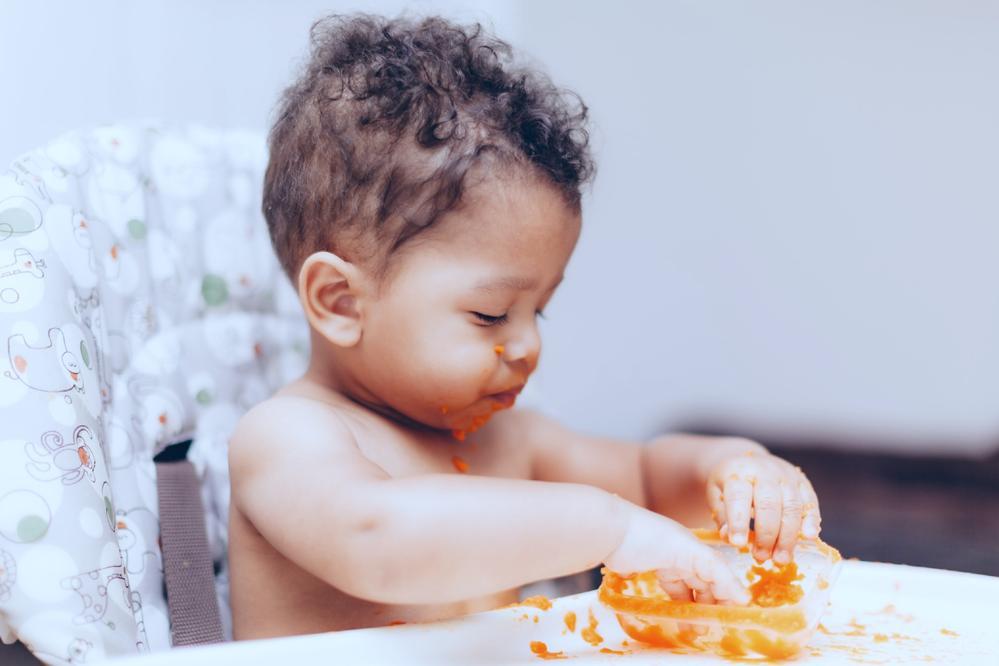
You have spent the first six months of your baby's life making sure that they are nourished with breastmilk or formula. As they grow and thrive, you might notice that your little sprout shows you some signs that they are ready to graduate from the bottle or breast to solid foods. If your baby can sit up and hold their head up, that is a great first sign! If they bring objects to their mouth and show an interest in what you are eating, your curious child might be ready to begin eating solid foods.
But what should you feed your baby? Here is a list of perfect starter foods for your baby from 6 to 9 months of age.
Best Baby Foods at 6 Months
At 6 months, babies may be starting to chew. Though this skill will not be mastered just yet, they are typically ready to get messy with some mushy, pureed eats—helping them learn about flavour and texture. At this age, the goal is not to satiate your baby with full meals of solid foods but rather to get your child curious and excited about their culinary options.
Because babies are growing so fast, their needs for iron are high to prevent iron-deficiency and support their overall health. Offer your little one iron rich foods like infant cereal (avoid rice cereal), well-cooked meat, poultry, mashed beans, and lentils. To keep your baby safe from choking, avoid adding solids like cereal to baby bottles.
Here are some great first foods for Baby to try:
- Mixing infant oat, grain, or barley cereals with breastmilk or formula and spoon-feeding your baby (avoid rice cereal, as it might contain arsenic).
- Well-cooked (think: soft and falling apart) beef, chicken, and turkey.
- Well-cooked and mashed beans and lentils
- Mashed banana, avocado, and sweet potato
- Pureed or strained fruits and vegetables
Best Baby Foods at 7 Months
By 7 months old, your baby will probably be eating more solids but not enough to replace breastmilk or formula as their primary source of food. The goal for this month is to keep introducing solid foods to your baby. What is fun is that by 7 months, it is safe to begin mixing flavours.
Here are a few nutritious and delicious food combos to try with your baby:
- Peas pureed with breastmilk (or formula), sweet potatoes, or squash
- Kale pureed with blueberry, squash, potatoes, sweet potatoes, peas, cauliflower, pears, or bananas
- Apples pureed with cauliflower, carrots, pears, prunes, or beets
Seven months is also the perfect age to start giving your baby a plate, bowl, and plastic utensils so they can begin to practice feeding themselves. If your baby is teething, you can place frozen chunks of fruit in a sieve feeder/mesh bag that allows them to gnaw on the fruit without choking.
Best Baby Foods at 8 Months
By 8 months, your baby is likely eating more solids and relying a little less on milk as a primary meal (though it is still where they get the bulk of their nutrition!). And they are probably having lots of fun learning how to use their hands to feed themselves. Something else to consider: Babies should be exposed to potential allergen foods (like peanuts, tree nuts, eggs, and fish) before their first birthdays to help prevent future food allergies. Starting at 6 months of age, peanut butter is safe to introduce as long as you are comfortable giving it to your baby.
In fact, the Anaphylaxis Campaign says that babies can begin having these foods from as young as three months of age. Of course, consult with your little one’s paediatrician if you have concerns about potential allergen foods.
Here are some foods to add to your repertoire:
- Whole eggs, scrambled
- Nut butter thinned out with water (nut butters are sticky and can cause choking)
- Fully cooked fish like salmon or tuna
Here are some preparation ideas:
- Well-cooked (think over-cooked until falling apart) pasta such as elbows or alphabet shapes
- Mashed meat with mashed or ground vegetables such as peas and potatoes or kale and squash
- Rainbow on a plate: Using tiny pieces of soft, strained, pureed, and mashed food options, look for a variety of colours to offer. Some fun options could include banana, avocado, sweet potato, peas, blueberry, raspberry, cheese, and chicken.
Best Baby Foods at 9 Months
Though there is a greater variety of foods babies eat now, formula or breastmilk continues to be their primary source of nutrition until age 1. At 9 months old, babies get more comfortable with self-feeding and eating the foods their families enjoy. After all, eating solid foods is a sensory wonderland of texture, smells, and tastes. Not to mention all that fun making messes with those adorably curious fingers.
As you begin to focus on meal planning for your baby, there are few things to keep in mind:
- Babies need four to five servings of fruits and vegetables a day. A serving size for a nine-month-old is about 50 ml.
- 'Eat the rainbow' is excellent advice because it gives your baby exposure to lots of different fruits, vegetables, grains, and starches.
Here are a few menu ideas to help meal plan for your baby:
Breakfast
- Fresh fruit cut up in small pieces such as banana, raspberries, or blueberries
- Whole grain waffles or pancakes
- Unsweetened oatmeal made with breastmilk (or formula) and add in apples and pears, or banana slices. It is essential to steam the apples or pears to make them soft enough for your baby to mash with their gums.
- Yogurt with fresh, cut-up, soft berries such as blueberries or raspberries
Lunch
- Spread hummus on soft crackers or bread
- Grilled cheese sandwich with cooled tomato soup
- Macaroni and cheese with cooked veggies like peas and carrots mixed in
- Pizza bites with chopped bits of spinach in the sauce and melted shredded cheese
Snacks
- Apple and carrot slaw
- Cheese slices
- Full-fat, plain yogurt
- Hummus and crackers
- Rice or graham crackers
- Hard-boiled egg
- Avocado slices
- A favourite flavour food pouch
Dinner
- To help your baby get and stay excited about eating solid foods, grind up whatever the family is having for dinner and serve that on a plate. Remember to steam or mash, grind or chop foods into appropriate softness and sizes to prevent choking.
- Pasta with softened vegetables and a little bit of salad dressing
- Well-cooked rice, soft veggies, and chicken
- Baked sweet potato with butter or cheese
There are endless variations on what you can serve your baby for dinner; as long as your baby is safe and happy, try to encourage lots of food exploration!
You must not feed any child under the age of one year honey, cow’s milk, juice, hard foods like candy, raw vegetables, popcorn, or sticky foods like peanut butter, as these each present choking hazards.
Haftungsausschluss: Die Informationen auf unserer Website sind KEINE medizinischen Ratschläge für eine bestimmte Person oder einen bestimmten Zustand. Sie sind lediglich als allgemeine Informationen gedacht. Wenn Sie medizinische Fragen und Bedenken bezüglich Ihres Kindes oder Ihrer eigenen Gesundheit haben, wenden Sie sich bitte an Ihren Gesundheitsdienstleister. Muttermilch ist die beste Quelle der Ernährung für Babys. Es ist wichtig, dass Mütter in Vorbereitung auf das Stillen und währenddessen eine gesunde, ausgewogene Ernährung zu sich nehmen. Die Kombination von Stillen und Flaschenernährung in den ersten Lebenswochen kann die Muttermilchversorgung verringern und die Entscheidung, nicht zu stillen, ist schwer rückgängig zu machen. Wenn Sie sich entscheiden, Säuglingsnahrung zu verwenden, sollten Sie die Anweisungen sorgfältig befolgen.
Top-Nachrichten


DIESEN ARTIKEL TEILEN
ELTERN WAHL
Bestseller