BABY
Does Your Baby Need Swim Lessons?
Dreaming of beach vacations or afternoons at the pool? To have an amazing time—and to be safe—it is imperative that the whole family knows how to swim.
Geschrieben von
Happiest Baby Staff
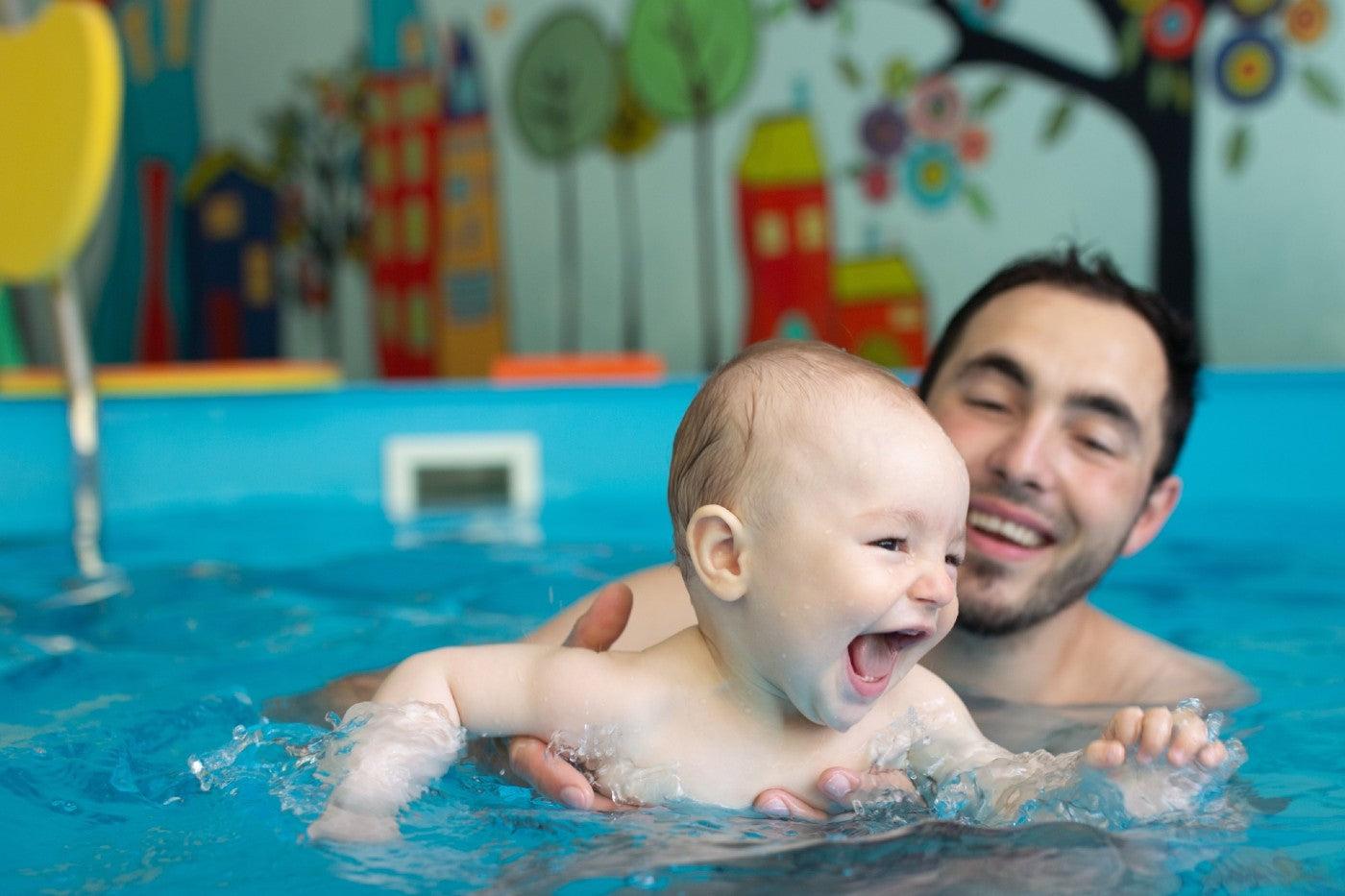
Dreaming of family beach vacations, afternoons at the town pool, or lazy days at the lake? To have an amazing time—and to be safe—it is imperative that the whole family knows how to swim. That means it is not too early to be thinking about swim lessons for your little one. No, your baby will not be doing the breaststroke anytime soon, but they will get a valuable introduction to water…and how to stay safe while having a blast. But before your sign your child up for swim lessons, there are a few things to know.
When can children start swimming lessons?
Your baby is allowed to start swimming lessons as soon as you are ready. Babies are allowed to go into the pool from birth, despite not having their immunisations, according to the NHS guidelines. The government has recognised the importance of teaching children swimming and water safety as drowning is the third most common cause of accidental death in children. One study found an 88% reduction in drowning risk in kids ages 1 to 4 who had taken swimming lessons. The National Water Safety forum also strongly recommends that all children ages 4 and older enroll in swimming classes. While you may be itching to sign your younger baby into swim class, know that currently there is no evidence that swim lessons for babies under 12 months lowers their drowning risk. However, parent-child 'swim' classes are a great way to help your baby get used to being in the water and to introduce water safety habits.
What should you look for in baby swim lessons?
Not all baby swim lessons are created equal. And that is why it is important to do your research! Here are some things to look for when selecting the best lessons for your toddler:
- Get a preview. Watch a class before you sign up. You want to gauge the instructor’s personality; how engaged the children are; how much one-on-one attention occurs; confirm there is a dedicated lifeguard; and more.
- Well-qualified instructors. Your child’s instructor should be CPR- and First Aid-trained and certified. They should be certified to teach swim lessons through a nationally recognised training program like Swim England.
- Find out what is expected. Swim instructions for little one should not be focused on strokes. Instead, the class should be about pre-swimming skills, like kicking, blowing bubbles, putting their face in the water—and water safety skills, like learning how to float.
- Ask about 'touch supervision.' This means that an adult should be within arm’s reach of your baby or toddler anytime they are in or around the water.
- Check the ratio. To ensure that instructors are always close by, look for a class thats ratio is no more than six kiddos per one instructor.
- Parent participation. This should be encouraged. When you get into the water with your little one, you show your child that this is a family activity…and you will know what to practice between sessions. (If you are unable to be in the water with your baby, consider private one-on-one instruction instead.)
- Temperature check. Not only do toddlers prefer warmer water, when the pool temperature falls between 30 and 32 degrees Celsius, it prevents hypothermia, something babies are at an elevated risk for.
- Clean water. Little ones are prone to swallowing water and if that water is not clean, they can get sick. That means water disinfection and proper chlorine levels is important.
- Swimsuit requirements. It is a good move to insist that children wear swimsuits that have snug-fitting legs holes. This will help avoid swim nappies accidents leaking into the water.
Know the limits of swim lessons.
There is no doubt that children’s swim classes are super important. But you also need to remember that swim lessons do not drown-proof a child of any age. To keep your child safe, also do the following:
- Supervise constantly. Keeping a close eye on your child in and around water is a must. That means ditch other activities, like reading or using your cellphone, when your child is in or around water.
- Assign a 'water watcher.' Having a family party or picnic near a lake or by the pool? Take turns amongst the grownups to be the 'water watcher' so there is always a designated adult in charge of keeping an eye on the children.
- Erect fences. Effective pool and hot tub barriers are imperative, especially since the primary drowning risk for toddlers is unanticipated, unsupervised access to water.
- Use life jackets. Anytime you are in, on, or near a natural body of water, such as a lake or river, secure your child in a well-fitted life jacket.
- Enforce the rules. From the get-go, children should know that they are never allowed to swim alone and that they are never to go near the water without adult supervision.
Haftungsausschluss: Die Informationen auf unserer Website sind KEINE medizinischen Ratschläge für eine bestimmte Person oder einen bestimmten Zustand. Sie sind lediglich als allgemeine Informationen gedacht. Wenn Sie medizinische Fragen und Bedenken bezüglich Ihres Kindes oder Ihrer eigenen Gesundheit haben, wenden Sie sich bitte an Ihren Gesundheitsdienstleister. Muttermilch ist die beste Quelle der Ernährung für Babys. Es ist wichtig, dass Mütter in Vorbereitung auf das Stillen und währenddessen eine gesunde, ausgewogene Ernährung zu sich nehmen. Die Kombination von Stillen und Flaschenernährung in den ersten Lebenswochen kann die Muttermilchversorgung verringern und die Entscheidung, nicht zu stillen, ist schwer rückgängig zu machen. Wenn Sie sich entscheiden, Säuglingsnahrung zu verwenden, sollten Sie die Anweisungen sorgfältig befolgen.
Top-Nachrichten

DIESEN ARTIKEL TEILEN
ELTERN WAHL
Bestseller