BABY
Baby Food Allergies: The Top Medical Reason for Colic
Of all the problems triggering persistent crying, baby food allergies and sensitivity rank right at the top.

Geschrieben von
Dr. Harvey Karp
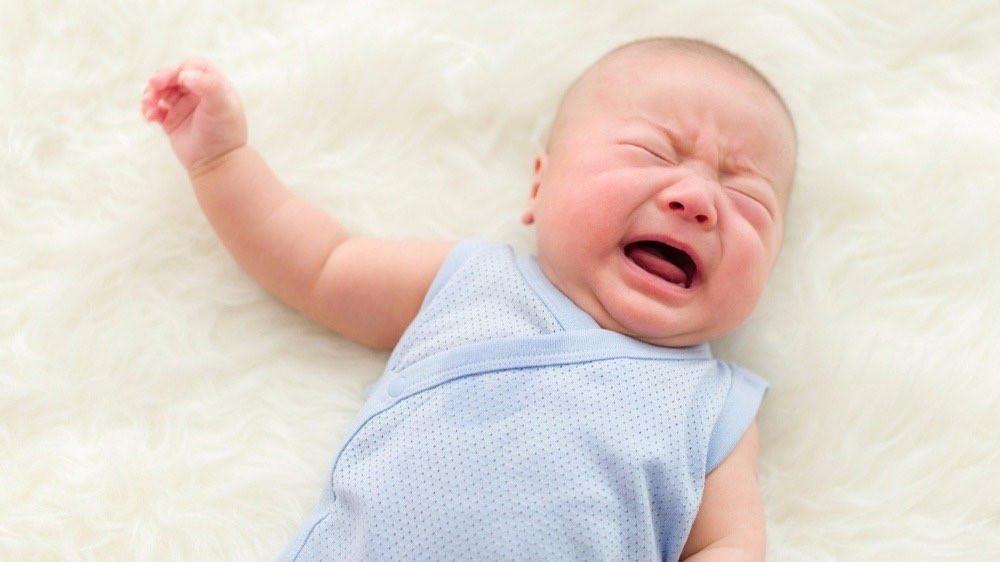
Of all the problems triggering persistent crying, baby food allergies and sensitivity rank right at the top. Food allergy symptoms in babies account for about 90% of colic caused by a medical issue (For most babies, colic is non-medical and can be helped with the 5 S's.)
Looking for Signs of Food Allergies in Babies
Babies suffering from allergies usually fuss throughout the day (not just at night) and have loose stools, sometimes with streaks of bloody mucus. Unfortunately, no simple blood test has been found to diagnose these problems. Figuring out if your child has a food sensitivity requires you to play Sherlock Holmes and carefully collect clues.
If you’re breastfeeding, your doctor may recommend that you go a week without consuming cow’s milk, eggs, peanuts, tree nuts, what, soy and fish to see if the crying improves. If you’re bottle feeding, she may suggest you try a special hydrolyzed formula containing milk proteins that are “pre-digested” into tiny, non-allergenic fragments. In past decades, we used to recommend switching to soy or lactose-free milk or even a formula based on lamb protein, but there’s no evidence that any of these are truly effective for colic.
Using a Food Challenge to Suss Out Baby Food Allergies
If you do decide to try dietary changes, keep a daily journal for a week to keep track of any improvement in crying. Any reduction in fussing may be proof of an allergy, but it may also be coincidence. Your baby’s doctor should suggest you do food challenge to really figure things out: After avoiding certain foods for a week, reintroduce a spoonful of the suspected food into your diet (if you are nursing) or feed your baby an ounce of the suspected formula. Try it once a day over four days; if there’s an allergy, your baby’s crying (and/or mucousy stools) will probably return within a day.
Note: always ask your doctor before altering your baby’s diet…or your own.
Haftungsausschluss: Die Informationen auf unserer Website sind KEINE medizinischen Ratschläge für eine bestimmte Person oder einen bestimmten Zustand. Sie sind lediglich als allgemeine Informationen gedacht. Wenn Sie medizinische Fragen und Bedenken bezüglich Ihres Kindes oder Ihrer eigenen Gesundheit haben, wenden Sie sich bitte an Ihren Gesundheitsdienstleister. Muttermilch ist die beste Quelle der Ernährung für Babys. Es ist wichtig, dass Mütter in Vorbereitung auf das Stillen und währenddessen eine gesunde, ausgewogene Ernährung zu sich nehmen. Die Kombination von Stillen und Flaschenernährung in den ersten Lebenswochen kann die Muttermilchversorgung verringern und die Entscheidung, nicht zu stillen, ist schwer rückgängig zu machen. Wenn Sie sich entscheiden, Säuglingsnahrung zu verwenden, sollten Sie die Anweisungen sorgfältig befolgen.
Top-Nachrichten






DIESEN ARTIKEL TEILEN
ELTERN WAHL
Bestseller