BABY
Where Should Baby Sleep?
A bassinet? Crib? Cosleeper? Your bed? Get Dr. Karp's advice.

Written by
Dr. Harvey Karp
What Should a Newborn Sleep In?
One of the first questions you have to answer after you give birth is, Where should baby sleep? A cot? Cosleeper? Your bed?
It is a decision that deserves some serious thought because it will affect your sleep, your baby’s sleep, and your baby’s safety.
Hands down, having your baby in your room is the best place for a newborn to sleep! It is cosier and much more convenient. You can easily hear when your baby spits up, has breathing trouble, or is uncomfortable in any way. And, as a total bonus: Having her parents sleep nearby reduces her cot death risk. The current recommendation by the National Health Service is to keep your baby in your room, in a cot during the first 6 months of life.
What Should a Newborn Sleep in? The Specifics
Make sure your baby’s sleeping spot has a wide base (so it is not easy to knock over). It should also have a firm mattress with a snug fit and sides should be at least 50 centimetres high (measured from the mattress base). If you choose a cot, make sure the cot is safe and properly assembled. (For guidance, visit the National Childbirth Trust’s website.)
The Best Place for a Newborn to Sleep
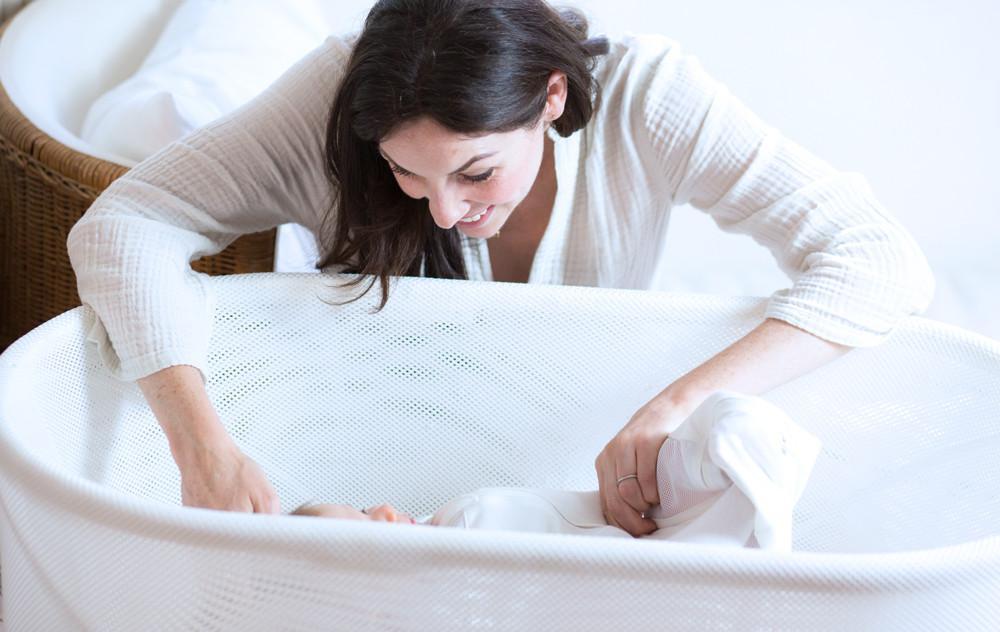
Happiest Baby is proud to have created SNOO Smart Sleeper. It can aid in keeping babies safely on the back, thanks to our unique swaddle which attaches to the cot. So in SNOO, babies benefit from swaddling without the risks of unraveling or loose blankets.
Around 5 or 6 months, many couples move their babies into a cot in another room. Babies tolerate the switch pretty easily at that age, although it is fine to wait longer.
[Read more: When to Move Baby to Own Room]
Where Should a Newborn Sleep? Locations to Avoid
Certain sleep spots pose risks for babies. Sleeping on living room furniture, sleeping sitting upright, and sleeping in poorly designed slings are all unsafe.
The Risks of Different Baby Sleeping Options
Furniture: Studies from all around the world agree: Sleeping on living room furniture is a huge risk! Scottish researchers found the risk of SIDS is 67 times higher among babies who were allowed to sleep on a sofa. The risk is also high for babies sleeping on recliners, armchairs, cushions, beanbag chairs, and air mattresses.
Car Seats: The car seat is another unsafe place for your baby to snooze, with the exception of the little naps they take on short car trips. During the first 6 months of life, a baby’s heavy head can fall forward when she is seated, causing difficulty breathing and asphyxiation.
Slings: And how about slings? Slings are terrific. They offer a delicious flow of touch, movement and sound, along with the continuous reassurance of your scent. On top of that, they leave your hands free for other jobs. These simple folds of cloth are so helpful to new mums; I suspect they may have been one of the first bits of clothing ever invented.
However, babies frequently fall asleep in their cosy slings, and there are a few things to know to keep your baby safe. Make sure your sling:
- Is not too deep—if your baby can sink into a little ‘C’ position at the bottom, she is at risk for suffocation from a lack of fresh air. (Your baby should be sitting high enough so you can see her face.)
- Supports your baby’s back so her chin does not fall forward and get pushed down against her chest, making it hard to breathe or cry for help.
- Holds your little one snug enough to prevent her from falling.
- Has no fabric folds that can press against her nose or mouth.
And one more sling rule: Never carry your baby in a sling when you are handling very hot food or liquids.
Swings: What about sleeping in the swing? Most swings are not safe because they keep a baby on an incline, which can cause their head to slump forward and restrict breathing.
Final Thoughts: What Should a Newborn Sleep in?
As you can see, there are several options for where your baby can sleep. Choose the one that is best for your family, but remember that your key job is to make sure your little one sleeps safely. If you would like to learn more about SNOO, then click here to learn more about the smart bassinet.
Disclaimer: The information on our site is NOT medical advice for any specific person or condition. It is only meant as general information. If you have any medical questions and concerns about your child or yourself, please contact your health provider. Breastmilk is the best source of nutrition for babies. It is important that, in preparation for and during breastfeeding, mothers eat a healthy, balanced diet. Combined breast- and bottle-feeding in the first weeks of life may reduce the supply of a mother's breastmilk and reversing the decision not to breastfeed is difficult. If you do decide to use infant formula, you should follow instructions carefully.






SHARE THIS ARTICLE
PARENT PICKS
Bestsellers