PREGNANCY
22 Weeks Pregnant: Have You Popped Yet?
In your belly, your baby is snoozing a whopping 12 to 14 hours per day!

Written by
Dr. Harvey Karp
SHARE THIS ARTICLE
PARENT PICKS
Bestsellers
PREGNANCY
Written by
Dr. Harvey Karp
SHARE THIS ARTICLE
Bestsellers
Your little one is long and lean at this stage—measuring about 25 centimetres (10 inches) from head to toe and weighing around 450 grams (1 pound). They haven’t put on much baby fat yet, so their skin still looks quite thin. Tiny hairs are sprouting on their head and eyebrows, too.
Your baby is practising grasping, sometimes holding onto their ears or the thick umbilical cord that drifts around them. Their lungs are filled with fluid for now, but they’re already forming the tiny air sacs that will one day help them breathe air.
Inside their head, big changes are underway. Taste buds are forming, and soon your baby will start recognising the flavours from your meals. They can also hear your voice and sense light—even though their eyelids remain closed while their eyes continue to develop. Their brain is growing rapidly, and by birth it will be 17 times bigger than it is now!
Your bub also has their own sleep–wake rhythm, snoozing for about 12 to 14 hours a day.
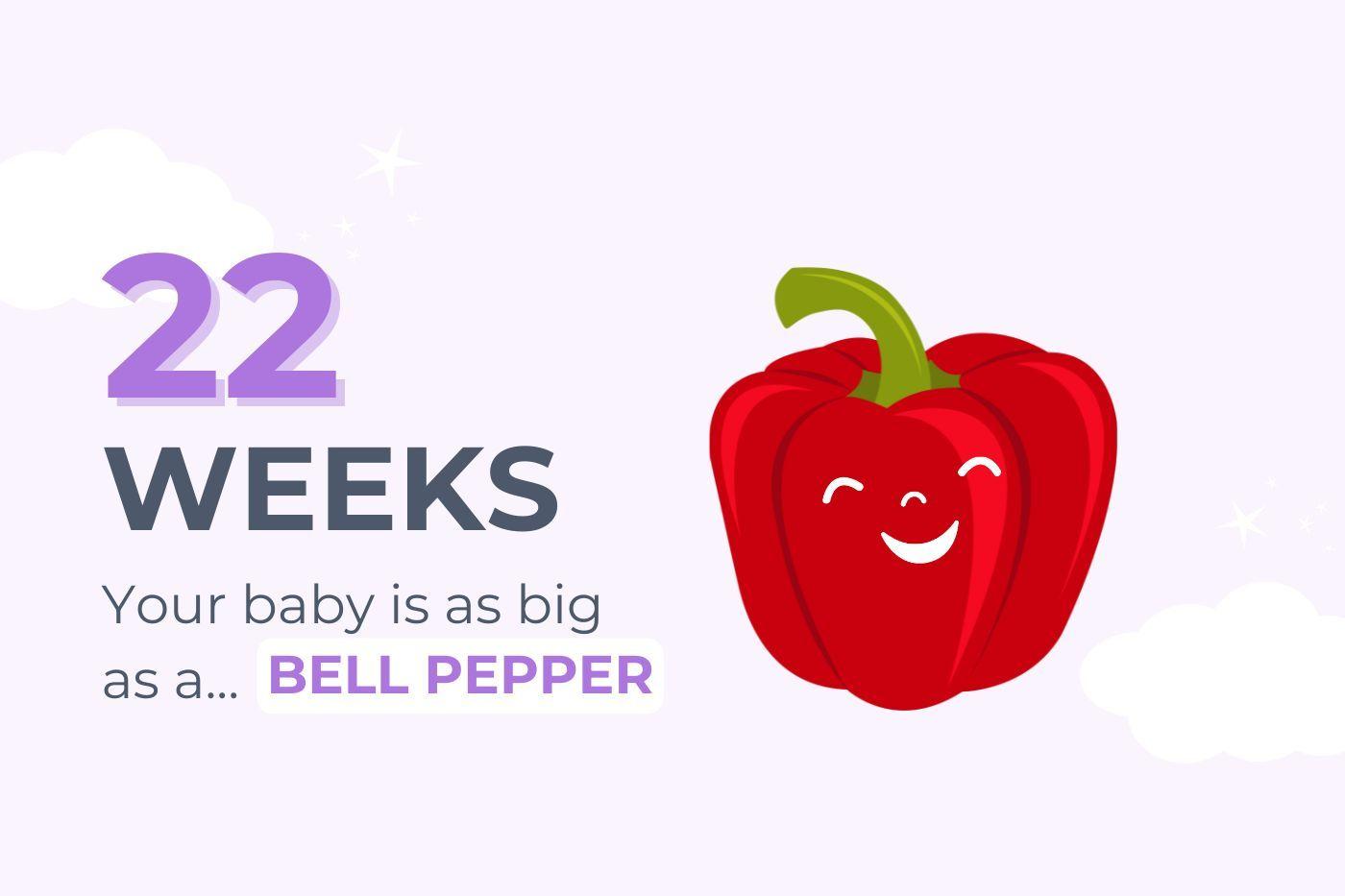
At 22 weeks, your baby is about the size of a capsicum (bell pepper).
You’re about five months and one week pregnant.
Noticed your belly button changing shape? As your bump grows, your uterus pushes against the skin behind your navel, sometimes turning an “innie” into an “outie.” This doesn’t happen to everyone, and most belly buttons return to normal after birth. If yours feels sensitive, soothe it with a little shea or cocoa butter and cover it with a plaster/band-aid for protection.
The extra weight of your growing baby and amniotic fluid can put pressure on the nerves in your lower back and pelvis. This can lead to lower back pain and sometimes sciatica—a pain that runs down the backs of your legs. It can feel like a dull ache, pins-and-needles, or even sharp shooting pain.
If pain worsens, check with your midwife or doctor. Medication is usually avoided, but you may be encouraged to try:
Some common second-trimester symptoms include:
Generally, oral sex is safe during pregnancy. The main exceptions: if your partner has a cold sore or an untreated STI—both of which need medical attention. Orgasms may trigger Braxton Hicks contractions, which can feel unusual but are not harmful. If you’ve been advised to avoid sexual activity (for example, due to risk of preterm labour or bed rest), check with your midwife or doctor before engaging.
“My mum used to say it doesn’t matter how many kids you have...because one kid’ll take up 100% of your time, so more kids can’t possibly take up more than 100% of your time.” — Karen Brown
Disclaimer: The information on our site is NOT medical advice for any specific person or condition. It is only meant as general information. If you have any medical questions and concerns about your child or yourself, please contact your health provider. Breastmilk is the best source of nutrition for babies. It is important that, in preparation for and during breastfeeding, mothers eat a healthy, balanced diet. Combined breast- and bottle-feeding in the first weeks of life may reduce the supply of a mother's breastmilk and reversing the decision not to breastfeed is difficult. If you do decide to use infant formula, you should follow instructions carefully.